


Spiritual-Teaching.org
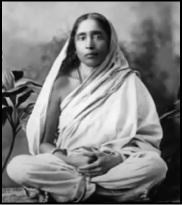
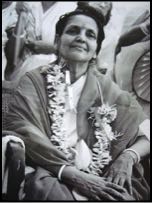
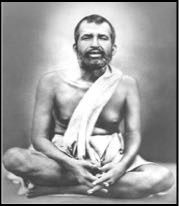
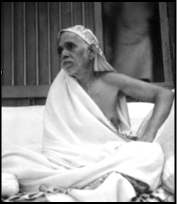
Q: What is the fundamental mistake of man's?
A: To think that he is alive, when he has merely fallen asleep in life"s waiting room."
These Divinely
inspired talks will purify your mind!
"Sri Ramakrishna said: "So long as God seems to be outside,
in different places, so long there is ignorance.
But when God is realized within, that is true knowledge.
A man woke up at midnight and desired to smoke.
He wanted a light, so he went to a neighbors house and knocked at the door.
Someone opened the door and asked him what he wanted.
The man said: "I wish to smoke. Can you give me a light?"
The neighbor replied: "What is the matter with you?
You have taken so much trouble and awakened us at this hour,
when in your hand you have a lighted lantern."
What a man wants is already with him;
but he still wanders here and there in search of it."
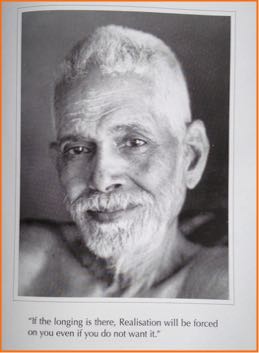
Bhagavan on the most essential state –
A Strong and Pure Mind
Talk #91
D.: “What is the meaning of the strength of the mind?
M.: Its ability to concentrate on one thought without being distracted.
D.: How is that achieved?
M.: By practice. A devotee concentrates on God; a seeker, follower of the jnana-marga, seeks the Self. The practice is equally difficult for both.
D.: Even if the mind is brought to bear on the search for the Self, after a long struggle the mind begins to elude him and the man is not aware of the mischief until after some time.
M.: So it would be. In the earlier stages the mind reverts to the search at long intervals; with continued practice it reverts at shorter intervals until finally it does not wander at all. It is then that the dormant sakti manifests. The satvic mind is free from thoughts whereas the rajasic mind is full of them. The sattvic mind resolves itself into the Life-current.”
Perhaps more than any other declaration of Sri Ramana Maharshi, this one confounds the newly hatched neo-Advaitins of our “fast food” modern generation most. They glibly proclaim that the mind is an illusion and the easiest thing on earth is to just sit back and “Be”.
But how does an honest seeker after Truth reconcile this very attractive lure with Bhagavan’s assurance that “A devotee concentrates on God; a seeker, follower of the jnana-marga, seeks the Self. The practice is equally difficult for both.”
And even more confounding is the statement from the Maharshi that practice, continued practice, can resolve the mind into the pure state where the manifestation of the Divine Mother (Sakti) aspect, from which originates the very Life-current of our existence, is revealed. This achievement is not a mere feeling of “going deep” into nothingness. Bhagavan declares It to be a manifestation, a Presence!
Can it be that we are offered the most sacred gift, the most precious communion of Grace - to really “Be” in the Presence of the Mother of All.
All we are asked to do is to “Seek so we may find”. For those who persevere to the glorious end, their voice resounds in unison to declare the Truth that to “Be” means to live and move within the wisdom of True Being - an all-pervasive living God.
Sri Ramana Maharshi on Spiritual Effort
“Can the ego, which is in bondage as the mind, become the Divine Self simply because it has once glimpsed that it is the Self?
Is this not impossible without the destruction of the mind?
Can a beggar become a king by simply visiting a king a declaring himself one?
“Realization takes time to steady itself. The Self is certainly within the experience of everyone but not in the way people imagine.
One can only say that it is as it is... Owing to the fluctuation of the vasanas (inherent qualities).
Realization takes time to steady itself. Spasmodic Realization is not enough to prevent rebirth,
but it cannot become permanent as long as there are vasanas... But if this is to be established further effort is necessary.”
The Teachings of Ramana Maharshi, p. 177.
But even if effort is necessary, why a guru, some ask? Once one grants that the Sages knew what they were talking about when they said spiritual attainment is an arduous path beset with dangers, it should be obvious that it is safer to be guided on it by one who has gone before and knows the way. That is one explanation; another is that the guru is a person of power. Grace flows through him to strengthen and support his followers. This can hold true for the simple guide or teacher to the highest jagat guru (world teacher). The prerequisite for both is that they know the way from traveling on it, never by just talking about it. Bhagavan Ramana was no exception. The Maharshi firmly declared to one who said that he never did sadhana or had a guru, “How do you know that I did not have a guru and did great effort, whether in this life or in one previous?”
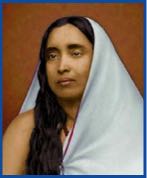
Bhagavan said that in the final sense “God and Guru are one.” This is not said to glorify and enthrone a human guru as a God. But more to firmly reiterate that the work at hand is beyond human capacity. To demonstrate this Sri Sarada Devi said, “The power of the Guru enters into the disciple and the power of the disciple enters into the Guru. That is why when I initiate and accept the sins of the disciple I fall sick. It is extremely difficult to be a Guru. But, my child, I was born for this purpose. If I do not accept others’ sins and sorrows and do not digest them who else will?”
(Some of the above is paraphrased from a writing of Arthur Osborne).
Bhagavan on how to see God - Talk #244
D.: Is not destiny due to past karma?
M.: If one is surrendered to God, God will look to it.
D.: This being God’s dispensation, how does God undo it?
M.: All are in Him only.
D.: How is God to be seen?
M.: Within. If the mind is turned inward God manifests as inner consciousness.
D.: God is in all - in all the objects we see around us. They say we should see God in all of them.
M.: God is in all and in the seer. Where else can God be seen? He cannot be found outside. He should be felt within. To see the objects, mind is necessary. To conceive God in them is a mental operation. But that is not real. The consciousness within, purged of the mind, is felt as God.
Many who have lived with Sri Ramana Maharshi said that the crown jewel of his teaching was its crystal-clear simplicity. But Bhagavan never theorized, and as Arthur Osborne declared, he always turned the questioner to sadhana - the path to be followed. For those attracted to spirituality, this is where they must begin. The cleaver ego, which attempts to ensure its survival at all costs, has no problem adopting the cloak of spirituality, as Bhagavan says, "like the thief pretending to be the policeman." This human foible is deterred by a spiritual guide, and for this reason (among many others), Masters like Bhagavan Ramana have come into this world.
With such a deluded mindset, the first prerequisite is to trivialize any direct implication towards sadhana made by Bhagavan. So bear with me if I suggest that perhaps “most” who read the above quote gave minimal thought to the fact that Bhagavan is giving clear direction to the arduous task placed before anyone who seriously attempts to “purge their consciousness of the mind”.
If we were sitting before Bhagavan, in the Ashram’s old hall, and if we had the great good fortune to have him notice that we were serious and sought his direction that would transform our lives, what might he say to us? Perhaps we can use the experience of those who did sit before him and wrote down for us what he said:
“Upon entering at the old hall where Bhagavan sat daily, he would instruct us to sit in a place where he could watch us as we meditated!”

“What mankind lacks today is prayer.”
“We seek God in books,
but it is in prayer that we find Him.
Prayer is the key that opens the heart of God.”
"Pray, Hope and don't Worry/"
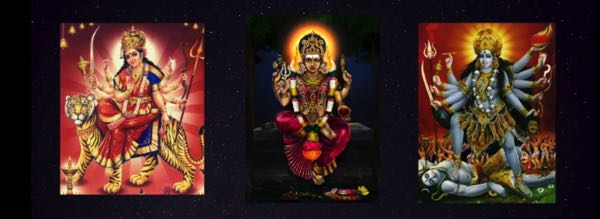
Discover Grace filled words and more below for a Godward Life
Quick Links to Favorite Website Contents
Favorite Website Audios
This guided meditation,
using the traditional method
of watching the breath,
also includes the practice of
linking the movement of the
breath with the sacred
mantra OM.
"Gentle Hatha Yoga"
A unique 1 hour session of
hatha yoga, guided by one
of the foremost instructors
in the Hawaiian Islands.
From the Philosophy of Gorakhnath on Om and the Breath
"God Rocking the Cradle"
Part 1 of 3. The making of an
Himalayan Saint,
Swami Shantananda Puri
"An Antidote for Sorrow"
Swami Shantananda discusses
how to train the mind to
experience a measure of peace
within meditation, free from
unwanted thoughts.
The Core teaching of
Sri Ramana Maharshi
This talk discusses the primary teaching of "Who Am I" dictated in the form of questions and answers between Bhagavan and a direct disciple.
It reveals how Bhagavan combined the traditional approach of knowledge and devotion (Jnana and Bhakti) to culminate in a direct perception of God within.
This discussion was given at a university class of religious study.
The Hidden Gospel: Decoding the Spiritual Message of the Aramaic Jesus by Neil Douglas-Klotz
As Yeshua says in Matthew 6:21 "Where your treasure is, your heart, courage, and passion will be also" can be seen through a more open reading from the Aramaic as:
What you hold onto in form will also be fixed in vision. The energy you contain in an individual effect or possession
Will also be bound in the field of vibrating cause. What you release from form will be available for vision.
The energy you allow to grow beyond your own creation. Cutting the cord that keeps you and it dependent
Will liberate both into a larger cosmos of unlimited creation.
Sit or stand comfortably for a few moments. Begin to breathe, feeling a connection through your whole body from underneath to above. Imagine that this straight line of breath supports you from underneath as well as pulls you from above. Imagine this straight line to be the line of your life's story, from past to future. Or imagine it as your connection to Alaha, an expression of your unique purpose in life. Affirm this straight line of your life as something that is whole and complete for now and will also continue to unfold.
Then breathe a few more breaths while you bring your hands and arms slowly together in front of you to form a circle. Breathe with the circle of your existence: those with whom you feel connected as friends, family members, or coworkers. Allow the feeling of the circle to expand to include a connection with the whole human family and with all of nature. Allow the circle to become as wide as you can. Imagine it as your connection to all that vibrates, as well as to the limitless reservoir of vision and power that surrounds you.
Finally, breathe for some moments with the feeling of the two worlds interpenetrating each other, in this moment. Identify with a sense of “I” that allows you to hold both, the individual and the cosmic.
Douglas-Klotz, Neil. The Hidden Gospel: Decoding the Spiritual Message of the Aramaic Jesus, Chapter 7: pp.104-105.
Experience "Shemaya (Aramaic rendering of "Heaven") which the
Lord Yeshua referred to as "Queendom":


"God Rocking the Cradle"
Part 3 of 3. The making of an
Himalayan Saint,
Swami Shantananda Puri
"God Rocking the Cradle"
Part 2 of 3. The making of an
Himalayan Saint,
Swami Shantananda Puri
Bhagavan's first Nobel Truth – Right Awareness - Talk #27
“The ebbs and flows of the consciousness, which constant practice renders increasingly perceptible to the meditator, gradually loosen the consciousness from the body and end by separating them in samadhi, so that the sadhaka (spiritual practitioner) is enabled to perceive the consciousness alone and pure. This is the Self, God the Absolute.”
A serious practitioner might surely reflect on how one can possibly become receptive to Grace. For even the Upanishads declare that Grace reveals Itself only to whom It pleases. Grace acts without provocation. It is for this reason that one of the Names of the Divine Mother is “She who is an ocean of compassion without reason”. We do not, and many Saints agree that we cannot, invoke the Grace of God by human effort.
But acts of prayer transcend the realm of human effort, for prayers are in truth, a mutual undertaking between the human and the Divine. Prayer, and its deepest counterpart, meditation, have been defined thus: “Prayer is when we talk and God listens. Meditation is when God talks and we listen.” Once we accept this Truth, we must recognize the necessity of refining our awareness towards increasingly perceiving what God is trying to tell us. Bhagavan Ramana, in the above quote, is also trying to tell us what we must achieve. This first Nobel Truth of Bhagavan's way, is to become aware of mercurial ebbs and flows of our mind, the state of which constitutes our consciousness. By constant practice to sit out the currents of the mind within meditation, we strive to perceive That which stirs the depths of our hearts and souls - Absolute God. When we touch the depths of the Ocean of Compassion within meditation, we awaken to its embrace.
If there can be a final word on the need for us to become still within meditation, and perceive that transforming Hand of God in samadhi, let Bhagavan have the final word:
“Unless Thou extendest Thy hand of grace in mercy and embrace me,
I am lost, O Arunachala.” Marital Garland of Letters, verse 51

Happily accepting the gift of God
in the form of illness
16th December, 1936 - Talk #295
M.: “Your nature is happiness. You say that is not apparent. See what obstructs you from your true being. It is pointed out to you that the obstruction is the wrong identity. Eliminate the error. The patient must himself take the medicine prescribed by the doctor in order that he may be cured of his illness.
D.: “The patient is too weak to help himself and places himself unconditionally in the hands of the doctor.
M.: “The doctor must be given a free hand and the patient must only remain quiet without saying anything. Similarly keep quiet. That is effortlessness.”
It has been said that illness is one of the most potent gifts of God's grace. Such grace is a veritable medicine for the soul. It is also a known fact that those to whom illness has laid prostrate will be the last to admit it as a gift of love. Bhagavan's guidance is simple and straightforward, whether in the realm of a Guru or a Doctor. The medicine that cures our wrong perception of life can also invoke true happiness, if we would only give up trying to modify the prescription with our own muddled up habits. To give the physician a free hand can be a bitter pill, if we do not keep quiet and let it be.


Be Still, and Know that I Am God!
An excerpt from
"Practical Sadhana - The Teachings of Sri Ramana Maharshi"
by Swami Sadasivananda
The scriptures of both East and West verify the Eternal Truth within such statements as: “Be still, and know that I am God” Psalm 46, Holy Bible, and “Unify the meaning of Thou and That within meditative silence, and experience peace of the form of moksha (liberation).” Vivekachudamani, verse 368.
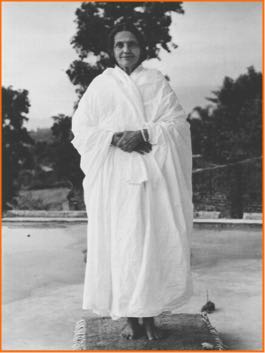
The process of verification is foolproof if practiced by a step-by-step process of experience within a heightened mind transformed by abhyasa (repeated spiritual practice). All mystical scriptures agree that we, as incarnated jivas (souls), though made in the image and likeness of God, have come under the spell of ignorance of our heritage of Divinity. The sole reason for this, though simple, has confounded the vast majority of mankind since the birth of creation. We are, as Sri Anandamayi Ma proclaimed with childlike innocence, “Born in the Kingdom of forgetfulness – therefore we forget!”
But for each and every calamity befalling mortals and Gods, there is a remedy. When Lord Rama sojourned on earth, he once asked his guru Sri Vasistha why it was that when they were together his knowledge and experience of the Self was undiminished, but when they were apart forgetfulness obstructed the vision of his divinity? Sri Vasisthadeva simply, but with great profundity, declared that the reason for forgetfulness was:
“Lack of abhyasa (repeated spiritual practice).”
Bhagavan Sri Ramana Maharshi echoed the same Truth when answering a devotee's comment that:
“Bhagavan's Grace is needed in order that meditation (and thus remembrance) should become effortless.”
Bhagavan replied: “Practice is necessary, there is Grace.” Guru Ramana, S.S. Cohen, Sri Ramanashramam 2006, p. 76.
Though God and His Truths never change, we seem to have wandered astray, being led by the whimsical desires of infantile habits. Assuredly, this child by adoption (our ego) is habitually perverse and dangerously errant, and deserves disownment. In fact, our very liberation demands it! A great scholar of Vedanta, and devotee of Sri Ramakrishna, Swami Yatiswarananda, has stated this condition with crystal clarity:
“We all know that the ego is perverse and how it is constantly changing its center of gravity. It is now identified with outside things, next moment with the body, then with the senses or the mind. It is mad and runs the risk of tumbling down any moment. How at times it becomes too much one-pointed, centered on itself! We forget that our individual consciousness is part of an infinite consciousness; we forget that the welfare of our fellow beings is inseparable from our own; we become egocentric, selfish and mean - a danger to ourselves, to our family and society.” Meditation and Spiritual Life, Swami Yatiswarananda, Ramakrishna Math Bangalore 2001, p. 241.
The complete eradication of this habit, and the state of perfection that we must strive for is exemplified completely with every detail of the life of Sri Ramana Maharshi. He has made the mold, now we must cast the image in his likeness.
In our own era the winds of change blow with gale force intensity, they toss the externalized mind about like a boat on a stormy sea. With even greater force our heedless impatience impels us to seek the easy road to Realization, a way that avoids and even denies the need for a path that skillfully trains one to overcome the mind by turning within.
Bhagavan Ramana emphasized this clearly when He stated:
“How to transcend the mind?” The Master answers: “Mind is by nature restless. Begin liberating it from restlessness: give it peace; make it free from distractions; train it to look inward; make this a habit. This is done by ignoring the external world and removing all obstacles to peace of mind.” Reflections on Talks with Sri Ramana Maharshi, S.S. Cohen, Sri Ramanashramam 2006, Talk 26 p. 129.
In the Vivekachudamani, by Sri Adi Sankara, we find a tried and proven 'road map' guiding us through the seemingly monumental task of “ignoring the external world and removing all obstacles to peace of mind.”
In verse 368 the 'goal supreme' is revealed through a gradual process beginning with what many Saints and Sages have declared to be mankind's 'root of all evil'- the tongue!” The following translation and commentary, given by Sri Candrasekhara Bharati of Sringiri, also sheds enormous light on the words of Sri Ramakrishna when he was asked to define “religion.”
The Paramahansa's answer was: “The union (yoga) between the mind and speech.”
The translation and commentary of Sri Candrasekhara Bharati follows:
“The first means to yoga is control of speech, then, not acquiring more than what is barely necessary, absence of desire, freedom from activity and ever living by oneself (in secluded places).”
The explanatory commentary continues:
“The first means to yoga which is restraint of all modifications is silence. For, by speech all forms of mental modificational activity grow… It is said that the first step to yoga is restraint of speech. The authority for this is the Kathopanishad which says: “Let the wise man restrain the speech in the mind; let that be restrained in the (vyasti - intellect) buddhi; let that buddhi be restrained in the mahat (samasti- intuitional) buddhi; let that be restrained in the atman which is the nature of shanti – immovable tranquil peace.”
The meaning is conveyed further as: “Control the speech in the mind; control that in the intellect; control the intellect in the witness of the intellect; merging that again in the infinite Purnatman, attain supreme peace… Give up all extraneous speech activity; in the beginning remain purely in the region of the mind. When silence becomes as strong as in the case of animals, restrain the mind in its twin aspects of determination and doubt in the buddhi, characterized only by firm conviction. Then the mind will become firm and silent, unable to act like the carpenter bereft of his tools.
That silent intellect should be merged in the caitanya (consciousness) limited by the buddhi of intellect. Destroy the upadhi (Upadhi – a term which means 'condition.') Due to this condition or upadhi an unlimited thing appears to be limited of the intellect and restrain it in the pure cognition which is the witness – consciousness. Realize the meaning of 'Thou' (twam) after careful analysis. Unify the meaning of Thou and That within meditation, and experience peace of the form of moksha (liberation).
Admittedly, this guidance is scholarly. But, nonetheless it is decisively understandable by one who follows its thread by the means of practice. The attempt of this commentary is to guide the aspirant through one of the most complex modes of heightening the mind. The culmination of this purified perception of the mind is not merely intellectual, but altogether experiential. The fruit of such practice is experiential understanding, or vijnana Vedanta as cited in the Kaivalya Upanishad– the realization of Truth through special meditative perception resulting in revelation.


O Birther! Father-Mother of the Cosmos,
you create all that moves in light.
O Thou! The Breathing Life of all,
Creator of the Shimmering Sound that touches us.
Respiration of all worlds,
we hear you breathing—in and out—in silence.
Source of Sound: in the roar and the whisper,
in the breeze and the whirlwind, we hear your Name.
Radiant One: You shine within us,
Douglas-Klotz, Neil. Prayers of the Cosmos (p. 12). HarperCollins. Kindle Edition.
Clearing Space for the Name to Live - Nethqadash shmakh
(KJV version: Hallowed be thy name)
Focus your light within us—make it useful: as the rays of a beacon show the way.
Help us breathe one holy breath feeling only you — this creates a shrine inside, in wholeness.
Help us let go, clear the space inside of busy forgetfulness: so the Name comes to live.
Your name, your sound can move us if we tune our hearts as instruments for its tone.
Hear the one Sound that created all others, in this way the Name is hallowed in silence.
In peace the Name resides: a “room of one’s own,” a holy of holies open, giving light, to all.
We all look elsewhere for this light— it draws us out of ourselves — but the Name always lives within.
Focus your light within us—make it useful!
Douglas-Klotz, Neil. Prayers of the Cosmos (pp. 16-17). HarperCollins. Kindle Edition.
Textual Notes - In the second line of the prayer, the root shm—the divine name, light, sound, experience—returns in a more specific form. In the first line, shem was spread throughout the universe; it was part of the underlying Unity in which everything lives. Here we affirm that the name will become qadash, “holy” (from which the Hebrew word kosher, “kosher,” is drawn). In Aramaic, one makes a thing holy by setting it apart, separating it for a specific purpose. Because this Aramaic construct occurs equally inside as well as outside of us, we might say that when we separate something, hold it inviolate, we create for it a holy place within. The roots of nethqadash also evoke the images of clearing or sweeping and of preparing the ground for an important plant. In one of the most beautiful pictures presented by the Aramaic, the roots show a person bending his or her head over a special place where seeds are sown, indicating also that one bends over the heart and plants devotion and perseverance at the same time. The inner shrine by which God’s name is hallowed can be developed only through letting go, releasing some of the clutter inside that keeps us too busy to be silent and receptive to the “still, small voice.” The prayer also leads us to consider our “feeling heart,” the place that mystics of all paths have called the inner temple. Jesus recommended going to this “heart-shrine” (one of the meanings of “enter into thy closet”—Matt. 6:6) whenever we pray. In another setting, Virginia Woolf called this “a room of one’s own.” When this inner shrine is established, it becomes possible to be, in the words of Jesus, “all-embracing” (usually translated as “perfect”) even as our Creator-source is all-embracing (Matt. 5:48). In Aramaic, the prayer always directs us in a practical fashion. To make the experience of Abwoon useful we need to create a place for this Oneness to live inside. Then the light of shem—the clarity or intelligence that arises in ultimate peace—becomes usable on an everyday basis, like light in a lamp.
Douglas-Klotz, Neil. Prayers of the Cosmos (pp. 17-18). HarperCollins. Kindle Edition.
The Hidden Gospel: Decoding the Spiritual Message of the Aramaic Jesus by Neil Douglas-Klotz
As Yeshua says in Matthew 6:21 "Where your treasure is, your heart, courage, and passion will be also" can be seen through a more open reading from the Aramaic as:
What you hold onto in form will also be fixed in vision. The energy you contain in an individual effect or possession
Will also be bound in the field of vibrating cause. What you release from form will be available for vision.
The energy you allow to grow beyond your own creation. Cutting the cord that keeps you and it dependent
Will liberate both into a larger cosmos of unlimited creation.
Sit or stand comfortably for a few moments. Begin to breathe, feeling a connection through your whole body from underneath to above. Imagine that this straight line of breath supports you from underneath as well as pulls you from above. Imagine this straight line to be the line of your life's story, from past to future. Or imagine it as your connection to Alaha, an expression of your unique purpose in life. Affirm this straight line of your life as something that is whole and complete for now and will also continue to unfold.
Then breathe a few more breaths while you bring your hands and arms slowly together in front of you to form a circle. Breathe with the circle of your existence: those with whom you feel connected as friends, family members, or coworkers. Allow the feeling of the circle to expand to include a connection with the whole human family and with all of nature. Allow the circle to become as wide as you can. Imagine it as your connection to all that vibrates, as well as to the limitless reservoir of vision and power that surrounds you.
Finally, breathe for some moments with the feeling of the two worlds interpenetrating each other, in this moment. Identify with a sense of “I” that allows you to hold both, the individual and the cosmic.
Douglas-Klotz, Neil. The Hidden Gospel: Decoding the Spiritual Message of the Aramaic Jesus, Chapter 7: pp.104-105.
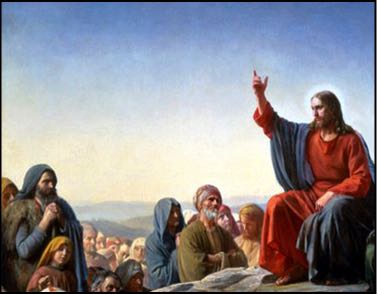
Experience "Shemaya (Aramaic rendering of "Heaven")
which the Lord Yeshua referred to as
"Queendom"
Swami Muktananda of Ananda Ashram speaking on the
"Significance of Sivoham"


Sivoham Part 1 of 4
Sivoham Part 4 of 4
Sivoham Part 2 of 4
Sivoham Part 3 of 4
"Not Pained by Pain"
with breath meditation
by
Thanissaro Bhikkhu
Love Embracing the Beloved
“All things are possible to him who believes,
they are less difficult to him who hopes,
they are easier to him who loves,
and still more easy to him who practices
and perseveres in these three virtues...
Believe me,
count as lost each day you have not used in loving God.”
Brother Lawrence
“Rejoice evermore. Pray without ceasing.
In everything give thanks: for this is the will of
God in Christ Jesus concerning you.”
1 Thessalonians 5:16-18
This article contains the Spiritual Maxims of one Nicholas Herman of Lorraine, a lowly born and unlearned man; who, after having been a soldier and a footman, was admitted a lay brother among the Carmelites Deschausses (bare-footed) at Paris in 1666, where he served in the kitchen of the community. He was afterwards known by the name of Brother Lawrence. He died in February 1691, at the advanced age of eighty, after a life the true saintliness of which can be well realized from his words of guidance.
“Herein you will not find set out a devotion which is merely speculative, or which can only be practiced in a cloister. No, there is an obligation laid on every man to worship God and to love Him, and we cannot carry out this solemn duty as we ought, unless our heart is knit in love to God, and our communion is so close as to constrain us to run to Him at every moment, just like little children, who cannot stand upright without their mother’s arms of love.”
Not only did Brother Lawrence perceive God as present in his soul by faith, but also in all events of life, whensoever they befell, instantly he could arise and seek the Presence of God. Yet he confessed that it was hard at first, that many a time he had been unmindful of this practice, but that, after humble prayer and confession to God of his failure, he had betaken himself to it again without trouble.
Of his life within God, his failures and attainments, he left a legacy of direction for those who would likewise seek “The Way, the Truth, and the Life in the Presence of God.” Thus his declaration most central to this undertaking was: “That the Presence of God can be reached rather by the heart and by love than by understanding. In the way of God thoughts count for little, love is everything.”
His one method of going to God and abiding in His Presence was to do all for the love of Him.
When we enter upon spiritual life, we ought to consider thoroughly what we are, probing to the very depth. Though creatures made for God, we are prone to all manner of maladies and subject to countless infirmities, which distress us and impair the soul’s health, rendering us wavering and unstable in our humors and dispositions. We must believe steadfastly, never once doubting, that all such is from God and for our good; that it is God’s will to visit us therein.
“Good when He gives, supremely good; Nor less when He denies. Afflictions, from His sovereign hand, are blessings in disguise.”
Brother Lawrence entreats us that we: “Must do all things thoughtfully and soberly, without impetuosity or precipitancy, with denotes a mind undisciplined. We must go about our labors quietly, calmly, and lovingly, entreating Him to prosper the works of our hands; thus keeping heart and mind fixed on God.
“That useless thoughts spoil all: that the mischief began there; but that we ought to be diligent to reject them as soon as we perceived their impertinence to the matter at hand, or to our salvation; and return to our communion with God. When we are busied, as well as while meditating on spiritual things, even in our time of set devotion, whilst our voice is rising in prayer, we ought to cease for one brief moment, as often as we can, to worship God in the depths of our being, to taste Him though it be in passing, to touch Him though as it were by stealth. Since you cannot but know that God is with you in all you undertake, that He is at the very depth and center of your soul, why should you not thus pause an instant from time to time in your outward business, and even in the act of prayer, to worship Him with your soul, to praise Him, to entreat His aid, to offer Him the service of your heart, and give Him thanks for all His loving-kindness and tender-mercies?”
The Spiritual Maxims of Brother Lawrence systematically guides us through the means for attaining unto the Presence of God:
1. The first is a great purity of life; in guarding ourselves with care lest we should do or say or think on anything, which might be displeasing to God.
2. Second is a great faithfulness in the practice of His Presence, and in keeping the soul’s gaze fixed on God in faith, calmly, humbly, lovingly, without allowing an entrance to anxious cares and disquietude.
3. Make it your study, before taking up any task to look to God, be it only for a moment, as also when you are engaged thereon, and lastly when you have performed the same. And forasmuch as without time and patience this practice cannot be attained, be not disheartened at your many falls; truly this habit can only be formed with difficulty, yet when it is so formed, how great will be your joy therein.
4. Let us mark well, however, that this intercourse with God is held in the depth of our being; there it is that the soul speaks to God, heart to heart, and over the soul thus holding converse there steals a great and profound peace. All that passes without concerns the soul no more than a fire of straw, which the more it flares, the sooner burns itself out; and rarely indeed do the cares of the world ever intrude to trouble the peace that is within.
5. It is here therefore, in the heart, that we ought to strive to make a habit of this gaze on God; but that which is needful to bring the heart to this obedience we must do, as has been said, quite simply, without strain or study.
6. When the mind, for lack of discipline when first engaged in this practice, has contracted bad habits of wandering and dissipation, such habits are difficult to overcome, and commonly draw us, even against our will, to things of earth. One remedy for this is to humbly offer prayer to God. A multiplicity of words in prayer is not advised; discursive forms of prayer are often an occasion for wandering.
7. One way to recall easily the mind in time of prayer, and to preserve it more in rest, is not to let it wander too far at other times.
8. This practice of the Presence of God is somewhat hard at the outset, yet, pursued faithfully, it works imperceptibly within the soul most marvelous effects; it draws down God’s grace abundantly, and leads the soul insensibly to the ever-present vision of God, loving and beloved, which is the most spiritual and most real, the most free and most life-giving manner of prayer.
9. Remember that to attain this state, we must control the senses, inasmuch as no soul, which takes delight in earthly things above those in their Creator, can find full joy in the Presence of God; to be with Him we must leave behind the creature.
Thus, Brother Lawrence compassionately entreats us to ‘seek and find’, to ‘knock and the door will be opened unto us’, for his final guidance is:
“All things are possible to him who believes, they are less difficult to him who hopes, they are easier to him who loves,
and still more easy to him who practices and perseveres in these three virtues...
Believe me, count as lost each day you have not used in loving God.”
Just prior to the final moment when this lover of the Beloved passed away in the embrace of His Lord, a brother asked him if he was at ease and what his mind was busied with? He said: “I am doing what I shall do, through all eternity – blessing God, praising God, adoring God, giving him the love of my whole heart. It is our one business, my brethren, to worship Him and love Him, without thought of anything else.”
The brethren then begged him to entreat of God for them to possess the true spirit of prayer. Brother Lawrence, without pain or struggle, without losing in the slightest the use of any of his faculties, in perfect peace and calm replied:
“There was need of labor on my part also to make myself worthy of such a gift.”
These were his last words.
Brother Lawrence "The Practice of the Presence of God"
Question: Celibacy is often seen in the modern West as an outmoded, old-fashioned practice. It is often viewed as repressive, life-denying—even antithetical to what spiritual practice is ultimately all about. Many spiritual authorities in the West are now teaching that to realize our full potential as human beings, we must embrace, rather than in any way avoid or repress, our sexuality. These views stand in stark contrast to what the great traditions have always taught. What do you think about this?
Swamiji: I don’t agree with the general attitude that has just been expressed. They have failed to grasp the place of brahmacharya in the spiritual life. It is not outmoded; it is not at all old-fashioned, and it is not repressive or life-denying. On the contrary, it is used as a plank for everlasting life, endless life. Their view of life seems to be a very, very limited and narrow view of life. This is not the only life there is. When you come to have a little glimpse or idea of what real life is, then you will just stand amazed. This present life as such is meaningless. It is a petty trifle, a nothing, if not understood in terms of its being a take-off runway for catapulting into that greater life.
This life is a means to that great, glorious, grand end and aim of human existence which is to enter into a life that is the life of God, that is one with God’s life, the Kingdom of Heaven. That is the whole purpose of human existence. Human life has been given to us as a passageway to Divinity, as a passageway to everlasting life.
No person with a little religious knowledge and awareness or a spiritual view will ever deny the validity of brahmacharya. It is something scientific and a scientific thing never gets outmoded or old-fashioned. Brahmacharya is neither avoiding sexuality nor repressing sexuality. It is giving the go-by to sexuality so that the potential and the power of the sexual process can now be used for something so wonderful that sex pales into insignificance in contrast.So brahmacharya is neither repressing sexuality nor avoiding sexuality. It is just bypassing sexuality—making use of this sexual potential for something ten times, a hundred times greater. Therefore, the question of repression and suppression is a misnomer. It is due to a lack of proper understanding of what the real spiritual quest is. If it is understood, then these terms will not be used. We are not just human beings; we are more than human beings. Our human status is only a pale reflection of what we really are. The only reason our human status acquires some meaning and significance is because if it is properly utilised, it can raise us up and take us into that which is our own, bring us into the Kingdom—to which we have a birthright.
If you want to understand the practice of celibacy through an analogy that is within the thought forms of today, consider an athlete whose great ambition is to win a gold medal at the Olympics. He will willingly put himself into the hands of a trainer, and if the trainer says, “No more late night revelry, no more sex, no more junk food, no more alcohol,” the athlete readily agrees. He says: “I’ll agree to this and more also if you want it.” Why? Because he wants the gold medal. And no one raises an eyebrow, no one is outraged. Why? Because the gold medal justifies all these so-called “inhibitions.” You cannot say that he’ s doing violence to or repressing himself, because he is not looking at it that way. He is willing to do anything that the trainer demands of him. It is not imposed upon him by other people. We understand why he is doing it and we accept it.
However, in one way the idea in the West that brahmacharya is suppression is not entirely off the mark. If one represses or suppresses some inherent natural force or faculty, it can bring about undesirable changes in the personality. If brahmacharya is forced upon an individual against the individual’s inclination and will, abnormal conditions naturally may result, because the person is being compelled to do something that deep within himself or herself the person does not want to do—compelled by others, by social restraint or by taking up vows that he or she ought not to have taken before having well considered exactly what it implied.
But if an intelligent person, having deeply pondered the whole basis of life, says: “When I want to achieve something great, something mighty, I cannot afford to deplete the energies that I have. The more I conserve, the more I can divert into that achievement and the greater the chance of succeeding.” So thinking and having understood the rationale of it and fully appreciating the ultimate achievement it would lead to, if he or she voluntarily, willingly and with great enthusiasm undertakes celibacy, where comes the question of suppression?
In October, 1997, His Holiness Sri Swami Chidananda—who in 1963 succeeded His Holiness Sri Swami Sivananda Maharaj as president of the Divine Life Society—was interviewed by a leading American spiritual magazine on the question of the role of celibacy in the spiritual life. This very powerful excerpt from the entire interview is a presentation of one of the questions asked and the answer given. It provides the sincere spiritual seeker with rare insights, not only into the role of celibacy in the spiritual life, but into the goal of life itself, enlightenment.
The Role of Celibacy in Spiritual Life


Passionless Look of Tenderness - Enlightenment and Love
Two Divinely Inspiring Talks on the Goal of combining both Jnana
and Bhakti to get a glimpse of the Experience of having
Sri Ramana Maharshi look at You!


Chapters on Prayer
Prayer is the offshoot of meekness and the absence of anger.
Prayer is the fruit of joy and gratitude.
Prayer is the defense against sadness and discouragement.
Those who accumulate pains and grudges in their heart and then imagine that they pray,
are like people who pour water into a cracked vase.
If you think you can heal someone else, be careful not to become incurable yourself
and so give a death blow to your prayer.
If you refrain from anger, you will find mercy.
So, be careful not to become presumptuous, and you will be among those who pray.
What is good but God alone (cf. Mark 10:18)?
Therefore let us entrust ourselves to Him in all that concerns us, and all will be well for us.
The One who is good is always and the giver of good things (cf. Jas 1:17).
When you find more joy in fulfilling your service of prayer than anything else,
then you will truly have found prayer.
Prayer without distraction is the mind's supreme state.
Prayer is the ascent of the mind to God.*
__________________
*(Evagrius Ponticus, Chapters on Prayer, 2012, Sr. Dominique Pascale-Nau, Rome)
Refrain: Rejoice, O Unwedded Bride!
O Virgin pure, immaculate/ O Lady Theotokos
O Virgin Mother, Queen of all/ and fleece which is all dewy
More radiant than the rays of sun/ and higher than the heavens
Delight of virgin choruses/ superior to Angels.
Much brighter than the firmament/ and purer than the sun's light
More holy than the multitude/ of all the heav'nly armies.
Rejoice, O Unwedded Bride!
O Ever Virgin Mary/ of all the world, the Lady
O bride all pure, immaculate/ O Lady Panagia
O Mary bride and Queen of all/ our cause of jubilation
Majestic maiden, Queen of all/ O our most holy Mother
More hon'rable than Cherubim/ beyond compare more glorious
than immaterial Seraphim/ and greater than angelic thrones.
Rejoice, O Unwedded Bride!
Rejoice, O song of Cherubim/ Rejoice, O hymn of angels
Rejoice, O ode of Seraphim/ the joy of the archangels
Rejoice, O peace and happiness/ the harbor of salvation
O sacred chamber of the Word/ flow'r of incorruption
Rejoice, delightful paradise/ of blessed life eternal
Rejoice, O wood and tree of life/ the fount of immortality.
Rejoice, O Unwedded Bride!
I supplicate you, Lady/ now do I call upon you
And I beseech you, Queen of all/ I beg of you your favor
Majestic maiden, spotless one/ O Lady Panagia
I call upon you fervently/ O sacred, hallowed temple
Assist me and deliver me/ protect me from the enemy
And make me an inheritor/ of blessed life eternal.
Rejoice, O Unwedded Bride!
“Rejoice, O peace and happiness/ the harbor of salvation,
O sacred chamber of the Word, flower of incorruption.
Assist me and deliver me, protect me from the enemy
And make me an inheritor of blessed life eternal.”


We leave you with these gifts...
"Remember God's Name, Nothing Else Matters!"
Sri Anandamayi Ma
Ma then went further to reveal that when we remember
God's Name, all that matters will manifest of it's own accord.
22nd March, 1937. Talk #377. p.356
A middle-aged Andhra visitor asks: A man is said to be divine. Why then does he have regrets?
Maharshi: Divinity refers to the essential nature. The regrets are of Prakriti.
Devotee: How is one to overcome regrets? Maharshi.: By realizing the Divinity in him.
D.: How? M.: By practice.
D.: What kind of practice? M.: Meditation.
D.: Mind is not steady while meditating. M.: It will be all right by practice.
D.: How is the mind to be steadied? M.: By strengthening it.
D.: How to strengthen it? M.: It grows strong by satsanga (the company of the wise).
D.: Shall we add prayers, etc.?
M.: Yes.
No matter how many times Sri Ramana Maharshi stressed the need for meditation, there will always be those who declare that he never told people to meditate. But these same people are not to be condemned; for they suffer from the same contagious dilemma we all suffer from - human nature. May I site two scriptural sources for this seemingly outrageous statement? First is from the Bhagavatam, in the Udhaav Parva, where one of the mind-born sons of Brahma declares that death is pramada, literally defined as “the willful indifference to the consequences of ignoring God.” Thus, Bhagavan urges for the Divine to be realized within, and the means he stressed in the above quote was meditation (universally said to be the best way not only to avoid ignoring God, but to be acutely aware of His Presence). The second, and possibly more to the point, is Terry Pratchett’s fourth Discworld Novel Mort. Here Mort inquires of Death why people don’t see Him. Death, with a definably wistful air of sadness responds, “Though they all know that I am part of the arrangement, they refuse to accept what they don’t want to see.”
By Divine Grace, Sri Ramana Maharshi and so many Saints and Sages, are also parts of the arrangement. But they are not afflicted by the contagion of humanity’s wants and dislikes. Bhagavan especially did not preach, nor did he seem to express sadness over the “human
condition”. Nonetheless, he wept for his Lord Arunachala, he wept over personal human tragedy, he wept to the point of exhaustion while reading about the dedicated practice and sacrifice of the Saints. And having assumed our human form, he definitely did urge ‘those who had ears to hear’ to find and merge with the source of peace and love and the Divine “small still voice within”. He taught the ‘way that makes us perfect’ within the tradition to which he took birth. Those who have ‘ears to hear’ understand his guidance when he says that it is:
'Practice (Abhyasa: repeated spiritual practice) that makes us perfect.’

To the Sufis, basking in the presence of God in the serenity of the present moment was more than enough reason to find joy in this existence, in the here and now, and more enriching than waiting for the rewards of a heavenly afterlife. This is what Rumi meant it his poetry when he spoke of preferring cash (enlightenment in this world) over credit (the next world).


"Always prefer cash over credit." - Rumi



"We are asked to resign ourselves to the will of God.
There is nothing but the power of God active in nature,
active in ourselves.
By surrendering ourselves to the Divine power and Will
we will release within us that
Supreme Bliss and Peace that is
locked up."
Papa Ramdas
Want more of a rare glimpse of Bhagavan


Miraculous Image of the Mother of God at Golgotha
within the Church of the Holy Sepulcher.



Golgotha, the actual place of the Lord's crucifixion,
within the Church of the Holy Sepulcher.
by St. Nectarios,
who received in a vision
from an angel of the Lord
this hymn,
where the angel declared:
“This is how we praise
the Most Holy Mother of God.”
Saint Nectarios
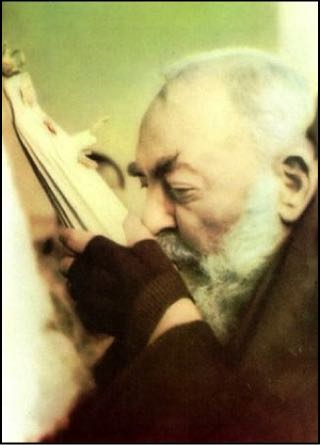
Saint Pio
An Aramaic translation of the Lord's Prayer Our Birth in Unity - d’bwashmaya
(KJV version: Our Father which art in heaven)
Evagrius Ponticus
Bytes of Wisdom From Bhagavan Ramana Maharshi
By Practice does Bhagavan mean Meditation?
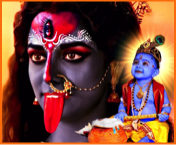
Master: “This second view is held in the Devi Purana. According to it, Kali Herself has become Krishna; but what difference does it make? God is infinite, and infinite are the ways to find Him.”
M. remained silent with wonder for a few moments and then said: “Oh, now I understand. As you say, the important thing is to climb to the roof. Our goal will be achieved if we can accomplish it by following any of the means - a rope or a pole.”
Master: “It is through the grace of God that you have understood that. Without His grace doubt is never cleared up. The important thing is somehow to cultivate devotion to God and love for Him. What is the use of knowing many things? It is enough to cultivate love for God by following any of the paths. When you have this love, you are sure to attain God. Afterwards, if it is necessary, God will explain everything to you and tell you about the other paths as well. It is enough for you to develop love for God. You have no need of many opinions and discussions. You have come to the orchard to eat mangoes. Enjoy them to your heart’s content. You don’t need to count the branches and leaves on the trees. It is wise to follow the attitude of Hanuman: ‘I do not know the day of the week, the phase of the moon, or the position of the stars; I only contemplate Rama.’”
"A devotee can know everything when God's grace descends on him. If you but realize Him, you will be able to know all about Him. You should somehow meet the master of the house and become acquainted with him; then he himself will tell you how many houses he owns and all about his gardens and government securities."
Devotee: "How does one receive the grace of God?"
Master: "Constantly you have to chant the name and glories of God and give up worldly thoughts as much as you can. With the greatest effort you may try to bring water into your field for your crops, but it may all leak out through holes in the ridges. Then all your efforts to bring water by digging a canal will be futile."
"You will feel restless for God when your heart becomes pure and your mind free from attachment to the things of the world. Then alone will your prayer reach God. A telegraph wire cannot carry messages if it has a break or some other defect."
"One must not cherish any desire whatever. The devotion of a man who has any desire is selfish. But desireless devotion is love for its own sake. You may love me or not, but I love You. This is love for its own sake.”

From the Gospel of Sri Ramakrishna
Grace of God Alone Clears up All Doubt
Love of God for its Own Sake

Though it is true that the path of bhakti (devotion) does not suit the temperament of all spiritual aspirants, it is undeniable that thinking of God, thinking of the “feet of the Lord”, does attract His grace. Whether devotion is achieved through bhakti or jnana, when the grace of God dawns upon us, our devotion deepens into love of Him. The love of God is the key that opens for us all knowledge, peace and purity.
This key is the keen and lively awareness and our patient endurance, while waiting on the Lord, which we have developed by persistently weathering out the storms of thought that mercilessly attempted to turn our attention outwards.*
____________
* Practical Sadhana, from the Teaching of Sri Ramana Maharshi. Page 83.
“Sri Bhagavan spoke and wrote most about the vichara or Self-enquiry,
and therefore the opinion arose that He prescribed only jnana-marga, the Path of Knowledge, which most people find too sheer in this age.
But in fact He was universal and provided guidance for every temperament,
by the path of Devotion no less than of Knowledge.
Love and devotion to Him are a bridge across the abyss to salvation.
He had many devotees for whom he prescribed no other path.”
(Ramana Maharshi and the Path of Self-Knowledge, Arthur Osborne, page 174.)
"Love and devotion to Him are a bridge across the abyss to salvation."
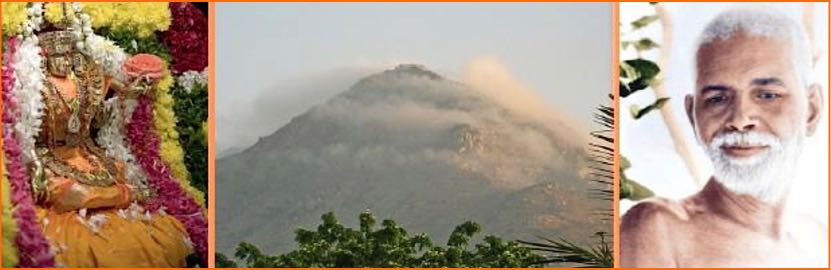
"Be anchored in fearlessness. What is worldly life but fear!
When you live in the grip of fear, must you not be afraid? It is futile to expect fearlessness there.
That you may be delivered from all sorrow you should endeavour to let God be your one and only support."
Sri Anandamayi Ma in Matri Vani
Devotee: "If one realised the Self and acted up to it in the West, one would be locked up in a lunatic asylum."
Maharshi: "You will be locking yourself in. Because the world is mad, it considers you mad.
Where is the lunatic asylum if it is not within. You will not be in it, but it will be in you.
Uncertainties, doubts and fears are natural to everyone until the Self is realised.
They are inseparable from the ego, rather they are the ego."
Sri Ramana Maharshi in Talks #612
"Look, in order to pluck a rose one has to put one’s hand into the midst of thorns.
But if the rose is a person’s aim and he has a keen desire to pluck it, he will not refrain from doing so for fear of being pricked.
Moreover, the Great Mother arranges whatever is necessary for each one.
She certainly knows the real need of every individual.
If one has at least this much faith, there is no reason at all to feel fear and distress...
Sustain the flow of God’s Name and no fear of any kind can exist is His Presence."
Sri Anandamayi Ma
Love of God Annihilates Fear
A young man from Colombo, Ceylon, said to Bhagavan: J. Krishnamurthi teaches the method of effortless and choiceless awareness as distinct from that of deliberate concentration. Would Sri Bhagavan be pleased to explain how best to practise meditation and what form the object of meditation should take?
B.: Effortless and choiceless awareness is our real nature. If we can attain that state and abide in it, that is all right. But one cannot reach it without effort, the effort of deliberate meditation. All the age-old vasanas (inherent tendencies) turn the mind outwards to external objects. All such thoughts have to be given up and the mind turned inwards and that, for most people, requires effort. Of course, every teacher and every book tells the aspirant to keep quiet, but it is not easy to do so. That is why all this effort is necessary. Even if we find somebody who has achieved this supreme state of stillness, you may take it that the necessary effort had already been made in a previous life. So effortless and choiceless awareness is attained only after deliberate meditation. That meditation can take whatever form most appeals to you. See what helps you to keep out all other thoughts and adopt that for your meditation.
In this connection Bhagavan quoted some verses from the great Tamil poet and saint, Thayumanavar, the gist of which is as follows: Bliss will ensue if you keep still, but however much you tell your mind this truth, it will not keep still. It is the mind that tells the mind to be still in order for it to attain bliss, but it will not do it. Though all the scriptures have said it and though we hear it daily from the great ones and even from our Guru, we are never quiet but stray into the world of Maya (illusion) and sense objects. That is why conscious, deliberate effort is needed to attain that effortless state of stillness.
Indeed, until the supreme, effortless state is attained, it is impossible for a man not to make effort. His own nature compels him to, just as Sri Krishna in the Bhagavad Gita told Arjuna that his own nature would compel him to fight.
D.: I want to be further enlightened. Should I try to make no effort at all?
B.: Now it is impossible for you to be without effort. When you go deeper, it is impossible for you to make effort.
D.: What is the difference between meditation and samadhi or absorption in the Self?
B.: Meditation is initiated and sustained by a conscious effort of the mind. When such effort entirely subsides, it is called samadhi.
B.: If you can keep still without engaging in any other pursuits, well and good. But if that cannot be done, what is the use of remaining inactive only with regard to realisation? So long as you are obliged to be active, do not give up the attempt to realize the Self."
"Meditation is a fight. As soon as you begin meditation, other thoughts will crowd together, gather force and try to overwhelm the single thought to which you try to hold. This thought must gradually gain strength by repeated practice. When it has grown strong, the other thoughts will be put to flight. This is the battle always going on in meditation.
So long as the ego lasts, effort is necessary. When the ego ceases to exist, actions become spontaneous.
No one succeeds without effort. Mind control is not your birthright. The few who succeed owe their success to their perseverance."

Meditation is a Fight!
"No one succeeds without effort. Mind control is not your birthright. The few who succeed owe their success to their perseverance" Sri Ramana Maharshi
Bhagavan: "So effortless and choiceless awareness is attained only after deliberate meditation. That meditation can take whatever form most appeals to you. See what helps you to keep out all other thoughts and adopt that for your meditation."
Devotee: It is said that only those who are chosen for Self- realisation obtain it. That is rather discouraging.
Bhagavan: That only means that we cannot attain realisation of the Self by our own mind, unaided by God’s grace. The Teachings of Ramana Maharshi in His own Words by Arthur Osborne pp.64-66
As St. Therese of Lisieux was embracing her final illness, the infirmarian found her awake, gazing toward Heaven.
"What are you doing? You ought to be trying to sleep." "I can't, Sister, I am suffering too much for that, so I pray."
"What do you say to Jesus?"
"Nothing, I just love Him."
At half past two on September 30, she told Mother Agnes,
“The chalice, Mother, is full to overflowing.
I could not have believed one could bear so much
and can explain it only by my great desire to save souls.
Thy will be done, My God, but have mercy on me;
sweet Virgin Mary, aid me.”
The Story of a Soul

"Love Alone Counts"


"O Sweet Virgin Mary"
"Pashupati (smiling): Everything will continue as long as the Divine Mother will keep it going.
Sri Ramakrishna: That is true. But it is good to keep one's mind on God. It is not good to forget Him.
Nanda Bose: How can our mind turn to Him?
Sri Ramakrishna: It happens if He is gracious.
Nanda Bose: But where is His grace? Has He the power to bestow it?
Sri Ramakrishna (smiling): I see. You hold the view of the pundits. A person reaps results according to his actions. Give that up! Karma is destroyed if one takes refuge in God. I prayed to the Divine Mother with flowers in my hand. "Mother! Here is your sin and here is your virtue. I do not want anything. Please give me pure devotion.
Mother! Here is your good and here is your bad. I do not want either good or bad. Please give me pure devotion.
Mother! Here is your dharma (laws) and here is your adharma (transgression). I do not want any of them, laws or transgressions. Please give me pure devotion. Mother! Here is your knowledge and here is your ignorance.
I do not want either knowledge or ignorance. Please give me pure devotion.
Mother! Here is your purity and here is your impurity. Please give me pure devotion."
From The Gospel of Sri Ramakrishna on The Love of God


”Prayer is an essential part of the practice of religion; its power is irresistible; prayer reveals the life of human beings.
All the thoughts that arise in your heart should be offered to God.
Pray for His Grace with all earnestness and in a spirit of self-surrender.”
Just at that time I was reading in the news paper that before Lord Irwin came out to India as Viceroy and Governor-General, he asked his father’s opinion. The latter replied,—”Don’t worry about the outcome of events; we have no control over them. Pray to God and you may get some glimpse of the future.” Both father and son went to a church to pray. While returning from there, the father said, “You will have to go to India.” The son confirmed, “I also feel the same.”
When Mother heard it, She said,—”This is a good instance of the efficacy of prayer. But one must have deep faith like a child.
By constant practice the foundation of faith becomes strong; when pure faith takes root in the mind, sincere prayer issues forth from the soul. Through devotion the real spirit of prayer awakens in one’s soul, when the Divine Grace manifests itself in the desired results.”
On another occasion Mother said,—”When you talk of Divine Grace it implies that something descends on man without any intelligible cause. At its own time it comes of its own volition. Your find a child forgetting his mother when deeply absorbed in his play; but the mother, out of her own motherly love, bends down over him and takes him on her lap.
The Divine Grace blesses a man just like that.
A mother’s affection reveals itself before the child has time to think of her. You will certainly say that blessings in the shape of Divine Grace are the result of one’s good in previous births. From one standpoint this may be true, but from a different view-point one may say, that as God is absolutely free from all chains of cause and effect, one must not enquire about His motives; though such search for reasons often disturbs us, His mercy descends on all beings evenly. But when one develops a higher vision, one begins to feel the Divine Touch. Have something to rely on. Try to be in vital contact with it and you will find the free flow of His blessings upon your soul, just as a bucketful of water comes out of a well only when the rope to which the bucket is tied is being pulled.”
- Sri Anandamayi Ma - Mother As Revealed to Me - by Bhaiji
Towards the middle of 1931, while walking in the Ramna fields, Mother Anandamayi said:


"You say: a person reaps results according to his actions. Give that up! Karma is destroyed if one takes refuge in God. I prayed to the Divine Mother with flowers in my hand. "Mother! Here is your sin and here is your virtue. I do not want anything.
Please give me pure devotion." Sri Ramakrishna
"You know before the Gita is read the book has to be worshipped. By “book”, His words and their import are meant.
As you continue to practice day after day, you will gradually reach a stage when absolute reliance on God will be your final achievement. There is nothing higher than that. This body tells you again: read the Gita daily and do some spiritual exercise, you will find answers to your queries revealing themselves in your mind.
If your desire to know Him is sincere and earnest and comes directly from the heart,
the solution must come. It is inevitable." Sri Anandamayi Ma
A rare interview with the personal attendant of Saint Pio who was with him, day and night, for the last years of his earthy life.
During the recording, Fr. Alessio recounts many miracles and wonderful stories about this glorious Saint of God never before heard.


The Lord bless thee and keep thee.
May He show His face to thee and have mercy on thee.
May He turn His countenance to thee and give thee peace.



Papa Ramdas on Prayer and Remembrance of God
Papa Ramdas, in his own recorded words, reveals how Prayer and Remembrance of God's Holy Name (Japa) are the mainstay for the revelation of His Presence within and without, and the end of our seperation from Him.
Papa Ramdas says that what we need is Grace, through which we can:
"Seek ye first the Kingdom of God,
and then all things will be added unto you."

Om Sri Ram Jai Ram Jai Jai Ram mantra sung by Prem, a blood relative of Papa Ramdas
Papa Ramdas on Prayer and Japa

A Timeless Moment with Sri Anandamayi Ma
from "Mother As Revealed to Me," from Bhaiji"s Matri Darshan
I have heard from Mother’s lips that when all the thoughts of the devotee flow in one stream towards God, all the sense objects come under its influence. At that stage even the fall of a leaf from a tree creates ripples in the field of his consciousness. During the earlier stages of Mother’s life whatever happened in the outside world found response in Her nature spontaneously.
After Her deep trance as soon as Mother recovered Her normal serenity, many yogic activities manifested themselves automatically; at that time one could hear some indistinct humming sound emanating from Her. A little later rumbling notes like the surging of sea-waves lashed by a storm followed; thereafter an uninterrupted, supremely melodious flow of divine truths emerged from Her lips in the shape of numerous Sanskrit hymns. It seemed that from the eternal sky Divine truths were taking shape in sound symbols through Mother’s speech. Such flawless pronunciation, such free flow of melody touching the inmost core of the listeners, received added charm from the Divine radiance of Her face. Even learned Vedic scholars could hardly have acquired Her free and easy mode of expression in spite of their best training and practice.
(Enter here to read the entire article on Sri Ma)



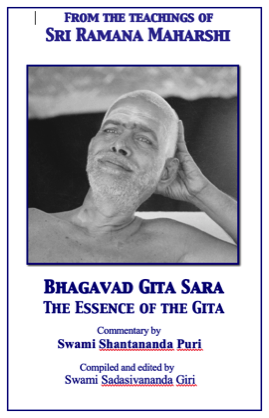
The idea is this; if you want to catch something that is vast and infinite, you should take a finite vessel, a limited vessel. If you take an unlimited thing, you simply will not catch it. So when you are trying to grasp the Lord who is vast and infinite, you require a vessel that is limited by the number of words and style of its pronunciation. It is for this reason that poetry is used. And not only poetry, the meter must be sung, for it is a 'Gita'.
And finally, one will be told what they will get out of it. One will become Srimaan; you will become full of Lakshmi. You will possess all eight qualities of Astha Lakshmi. Therefore, the Lord is saying that if one comprehends in full, and takes the directions into practice, finally Moksha Lakshmi will be theirs. You will be bestowed with that Grace and become Srimad. (Swami Shantananda Puri from The Bhagavad Gita Sara - the Teachings of Sri Ramana Maharshi)

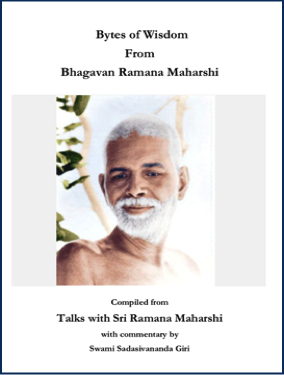
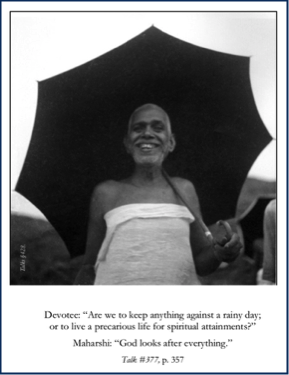
“Realization of the Absolute is not a talk, is not a play. It is the most difficult and the hardest of all tasks. It demands the price of one's very self. Will you really and willingly pay it? It demands your ego.
It demands your very being as the cost for Self-realization.


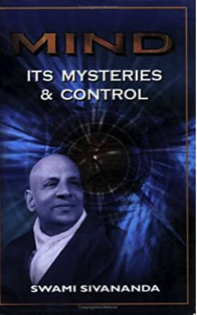
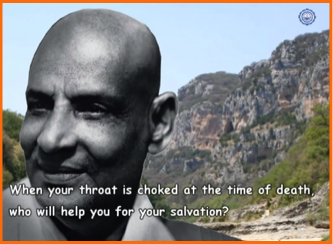
"The Rugged Path"
A personal letter from Swami Sivananda Saraswati

Swami Sivananda Saraswati
"Nothing that is worthwhile is to be achieved without undergoing a corresponding amount of pain and suffering. No enduring ideal can be attained without tire and sweat. The seed splits and perishes to put forth the plant. The flower lays its life to give place to the sweet fruit. It is in the furnace that gold emerges from the ore. Even so, the price of sainthood is to be paid in the interim period of utter loneliness, privation, and struggle which the really aspiring soul passes through. Every soul on the path of God-realization harbours no illusions about the true nature of the spiritual path. There is absolutely no royal road in spirituality.
"Adversity is a divine blessing in disguise. Adversity develops the power of endurance and will-force. Adversity develops fortitude and forbearance. All the Prophets, Saints, Fakirs, Bhaktas and the Yogins of yore had to struggle hard against adverse circumstances. The Almighty Lord puts His devotees under severe tests and rigorous trials. Every soul on earth is being tested by God for his sincerity and patience. He puts the aspirants into various kinds of troubles. He will make man utterly hopeless and helpless and watch and see whether one has the real devotion for Him or not in such straitened circumstances. We cannot say exactly what form these trials will take. But the sincere devotee is never afraid of such kind of tests....."
Enter here to read all of Swami Sivananda's "The Rugged Path"


The Lord, Who is in all things, Is NOT in all thoughts!
"Of the strong, I am the strength devoid of desire and attachment, and in (all) beings,
I am the desire unopposed to Dharma, O Arjuna!" Bhagavad Gita 7:11
"I am that strength which is necessary for the bare sustenance of the body.
I am NOT the strength which generates desire and attachment for sensual objects
as in the case of worldly-minded persons." Swami Sivananda Saraswati Commentary
This most important verse within the Gita, is also to many the most overlooked and disregarded. For those who fall into this category, the reason is obvious. And their anger when contradicted is also most telling.
In our "modern" times, the fast-food approach to spirituality and religion is a most sought for commodity. This mind-set, technically referred to as Neo-Advaita, is in traditional scripture referred to as pramada - spiritual death (spiritual degradation without concern for the consequences). Although the Gita's fundamental philosophy declares that the Atman does not ever die, the human capacity to reveal and awaken the consciousness of the Atman can be crippled unto death.
The ancient Saintly King Bartruhari, who became an enlightened Sage, used the word pramada in the correct spiritual sense indicated by the Sage Sunat Sujata. He proclaimed:
“Peetva mohamayeem pramada madiram unmatta bhootam jagat”
“This world (its inhabitants therein) has become mad after having drunk the wine of negligence (pramada: laxity towards the spiritual goal), which being of the form of moha (delusion),
has overwhelming power to delude you.” Mahabharata 5.41-42.
The Sage Sanat Sujata is indicating that the presence of pramada brings about a spiritual death. For the spiritual madness that at first manifests as a fever of willful and angry indifference to the consequences of inattention to and negligence of God, is rendered deadly when it becomes habitual. This madness and anger literally destroys our faculty of discrimination, which before our “disease of pramada” was our guiding light on the path to Godliness.
Enter here to view this entire article


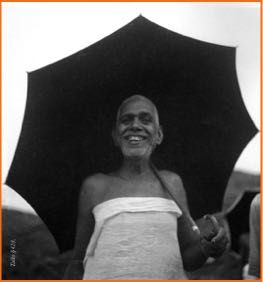

Guided Meditation
Using the traditional method of watching the breath, also includes the practice of linking the movement of the breath with the sacred mantra OM,
(or chant Soham, or as you wish, any Name of God)


Sri Ramana on Spiritual Effort
Devotee: “Can the ego, which is in bondage as the mind, become the Divine Self simply because it has once glimpsed that it is the Self? Is this not impossible without the destruction of the mind? Can a beggar become a king by simply visiting a king a declaring himself one?
Maharshi: “Realization takes time to steady itself. The Self is certainly within the experience of everyone but not in the way people imagine. One can only say that it is as it is... Owing to the fluctuation of the vasanas (inherent qualities). Realization takes time to steady itself. Spasmodic Realization is not enough to prevent rebirth, but it cannot become permanent as long as there are vasanas... But if this is to be established further effort is necessary.” The Teachings of Ramana Maharshi, p. 177.
But even if effort is necessary, why a guru, some ask? Once one grants that the Sages knew what they were talking about when they said spiritual attainment is an arduous path beset with dangers, it should be obvious that it is safer to be guided on it by one who has gone before and knows the way. That is one explanation; another is that the guru is a person of power.
Grace flows through him to strengthen and support his followers. This can hold true for the simple guide or teacher to the highest jagat guru (world teacher). The prerequisite for both is that they know the way from traveling on it, never by just talking about it. Bhagavan Ramana was no exception. The Maharshi firmly declared to one who said that he never did sadhana or had a guru, “How do you know that I did not have a guru and did great effort, whether in this life or in one previous?”
Bhagavan said that in the final sense “God and Guru are one.” This is not said to glorify and enthrone a human guru as a God. But more to firmly reiterate that the work at hand is beyond human capacity. To demonstrate this Sri Sarada Devi said, “The power of the Guru enters into the disciple and the power of the disciple enters into the Guru. That is why when I initiate and accept the sins of the disciple I fall sick. It is extremely difficult to be a Guru. But, my child, I was born for this purpose. If I do not accept others’ sins and sorrows and do not digest them who else will?” (Some of the above is paraphrased from a writing of Arthur Osborne).


[from Bytes of Wisdom, with rare archival photos of Bhagavan Sri Ramana]
Certainly!
4th October, 1938 - Talk #527
A group of respectable Coorg ladies was in the hall. One of them asked:
I have received a mantra. People frighten me saying that it may have unforeseen results if repeated. It is only Pranava. So I seek advice. May I repeat it? I have considerable faith in it.
Maharshi: Certainly, it should be repeated with faith.
D.: Will it do by itself? Or can you kindly give me any further instructions?
M.: The object of mantra japa is to realize that the same japa is already going on in oneself even without effort. The oral japa becomes mental and the mental japa finally reveals itself as being eternal. That mantra is the person’s real nature. That is also the state of realization.
D.: Can the bliss of samadhi be gained thus?
M.: The japa becomes mental and finally reveals itself as the Self. That is samadhi.
In the above quote Sri Ramana Maharshi exemplifies the eternal truths echoed by the ancient Seers of India. Further discussion of the meaning and intent of the Maharshi might only “muddy the waters” of what remains to this day as crystal clear.
His words might be distilled down to the essential, for those who still find his words confounding.
Devotee: What should one do spiritual practice for?
Maharshi: Thought of God, certainly.
Devotee: Should I have faith in such practice?
Maharshi: Certainly!


"Remember
God's Name, nothing else matters!"
Sri Ma Anandamayi


The Science of Japam
Essential lectures on why and how to Remember God's Name
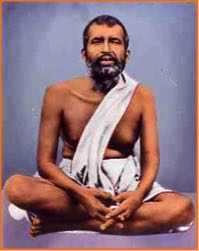
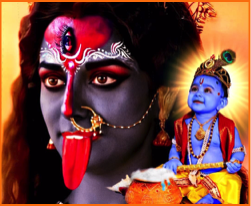

THE MEDITATION ROOM
The meditation room should be regarded as a temple of God. Talks of profane nature should never be indulged in the room. No vicious thoughts of rancorous jealousy, avarice are to be entertained there. Admittance should ever be sought in it with a pious and reverent mind. For, what we do, what we think and what we speak of leave their impressions on the ether of the room and, if no care is taken to avoid them, they will exert their influence on the aspirant’s mind and, rendering his mind perverse and restive, make him incapable of attending to the devotion. The words uttered, the thoughts cherished, the deeds done are not lost; they are always reflected on the subtle layers of ether encircling the room where they are done and affect the mind invariably. As much as possible effort should be made to overcome them. This is to be done for a few months only; when the habit is changed, everything will be all right.
HOW TO MEDITATE
Sit in a lonely place on Padma, Siddha or Sukha Asana. Free yourself from all passions, emotions and impulses. Subjugate the senses. Withdraw the mind from objects. Now the mind will be calm, one-pointed, pure and subtle. With the help of this trained instrument, disciplined mind, contemplate on that one Infinite Self. Do not think of anything else. Do not allow any worldly thought to enter the mind. Do not allow the mind to think of any physical or mental enjoyment. When it indulges in these thoughts, give it a good hammering. Then it will move towards God. Just as the Ganga flows continuously towards the sea, thoughts of God should flow continuously towards the Lord. Just as oil, when poured from one vessel to another, flows in an unbroken, continuous stream, just as the harmonious sound produced from the ringing of bells falls upon the ear in a continuous stream, so also the mind should ‘flow’ towards God in one continuous stream. There must be a continuous divine Vritti-Pravaha, Svajatiya-Vritti-Pravaha, from the Sattvic mind towards God through continuous Sadhana.
Click on any website section below to enter it's contents
The Science of Japam
Essential lectures on why and how to Remember God's Name

This gem of Spiritual Guidance, if alone adhered to in this Kali Yuga, will certainly bring one to the most sought for Realization!
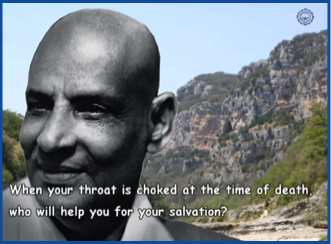
{Enter above to find out!!}
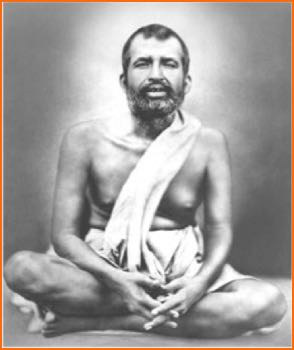
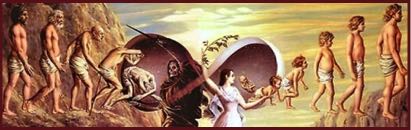
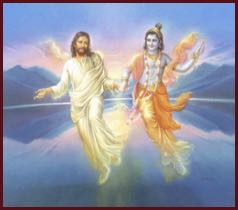
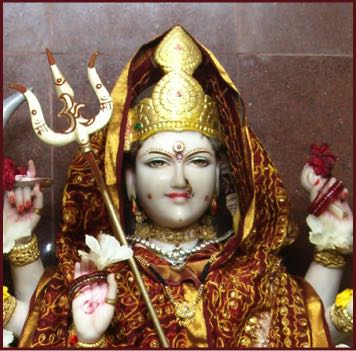
These Divinely
inspired talks will purify your mind!




From the Gospel of Sri Ramakrishna
"The body is really impermanent. When my arm was broken I said to the Mother,
"Mother, it hurts me very much." At once She revealed to me a carriage and its driver.
Here and there a few screws were loose. The carriage moved as the driver directed it.
It had no power of its own." The Master to Trailokya (smiling) p.397.
Sri Ramakrishna said to Ishan: "Live in the world like an ant. The world contains a mixture of truth and untruth, sugar and sand. Be an ant and take the sugar. Again, the world is a mixture of milk and water, the bliss of God-Consciousness and the pleasure of sense-enjoyment. Be a swan and drink the milk, leaving the water aside.
Live in the world like a waterfowl. The water clings to the bird, but the bird shakes it off. Live in the world like a mudfish. The fish lives in the mud, but its skin is always bright and shiny.
The world is indeed a mixture of truth and make-believe. Discard the make-believe, and take the truth." Gospel Ch. 25, p.472


The most enlightened understanding of the Supreme Predicament
we all find ourselves within:
"Man consists of Atman, mind and body. The Atman has two aspects, changeless and changing.
The latter is called the world and the former God. World also is nothing but God in manifestation.
God in movement is the world. Not that the world does not exist, it has a relative existence.
Atman is all-pervading, all blissful, all-powerful, all-knowing, eternally perfect and pure.
It assumes these names and forms called the world (Nama Rupa Jagat) of its own free will.
There is no desire, because there is no outside object. This will is called Shakti. It is Atman in action.
In Nirguna Atman this Shakti is static. In Saguna, it is dynamic.
Atman has no desire, because it is perfect, and because there is nothing which is objective to the Atman.
Desire implies attraction, which presupposes imperfection.
It is the very negation of will which is decision for action from within.
The Atman wills and the universe comes into being. The will of the Atman upholds and governs the universe.
Human beings are driven hither and thither by egoism, desires and fears due to identification with the
limiting adjunct of mind and body. This idea of limitation is called egoism."
~~ from Concentration and Meditation by Swami Sivananda, page 186
And yet another Supreme Predicament ~~ Playing Hide and Seek with God (life after life!)


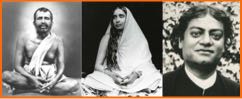
The Remedy to our predicament!
It isn't only meditation that I emphasize. Meditation plus keeping your mind on God during activity is what is necessary.
Half the battle will be won by meditation, for the soul power that you bring out during meditation will influence your thoughts and behavior during activity.
When you meditate deeply, that gives substantiation to your spiritual thoughts. The longer and deeper you meditate on a regular basis, the more you will find that there is no difference between work and meditation. That is to say, whether you are working or meditating, you remain immersed in the Divine consciousness of the blissful Spirit.
You no longer identify yourself with the activities and aches and pains of a mortal body; you realize you are pure Spirit.
Paramhansa Yogananda, Journey to Self-Realization


A Gift from Swami Sivananda and other Saints of India!


Letters from Arunachala
Over the past quarter century, there has been an increased interest in Bhagavan Sri Ramana Maharshi, his life and teachings as well as an explosion of Indian pilgrims particularly around the full moon, who come to be blessed by the sacred hill Arunachala.
These personal letters are the firsthand experiences of such a Journey toward Blessedness, our journey as well, from such a pilgrim who came and by the Grace of Bhagavan, endured through all this world can throw at us - "Seeking the One who wakes with the waking man, dreams with the dreamer, and sleeps the deep sleep of the dreamless sleeper. He who transcends these three states to become Himself. His true nature is pure consciousness."
Om Sri Ram Jai Ram Jai Jai Ram
"Your life is a current that started from an Eternal Source.
Make it flow in all its pristine purity
so that it may lighten the burden of the weak,
relieve the distress of the suffering,
elevate the hearts of the depressed."
Swami Ramdas

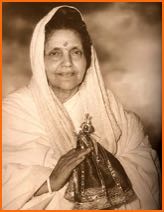
A rare interview with the personal attendant of Saint Pio who was with him, day and night, for the last years of his earthy life.
During the recording, Fr. Alessio recounts many miracles and wonderful stories about this glorious Saint of God never before heard.


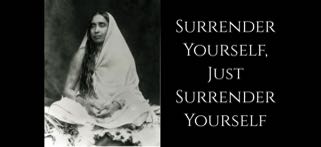

Enter above on Sri Ma Sarada Devi,
.Sri Ramana Maharshi and
Sri Anandamayi Ma .to discover how!
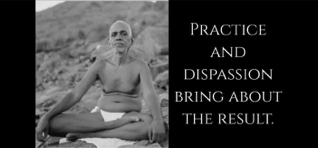
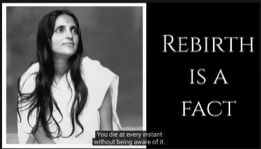
Devisuktam
Enter for the true meaning of the most ancient
Vedic Hymn to the Divine Mother of us all!

Enter above on your choice for words of grace.


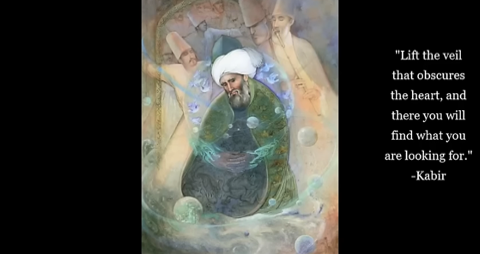

Swami Jyotirmayananda [ yrf.org ] - A direct disciple of the Mahapurush Swami Sivananda of the Divine Life Society,
here clearly expands on two of the most significant verses of the last chapter of the Bhagavad Gita [ Chapter 18:41 - 42 ].
In Yoga Vasistha Section 16 on "Why your Ego has three hidden cars",
And Swamiji gives a wonderful explanation in Shandilya Bhakti Sutras on "Why Sri Krishna declares Bhakti to be the highest Yoga".
In Tulsi Ramayana on "Lord Rama's advice on controlling the mind!".
In Chapter 11 of The Bhagavad Gita on - "The Yoga of the Cosmic Vision".
In Chapter 18 of the Bhagavad Gita on -" Wisdom and Love - the Two Wings of Spirituality".
Finally the Sacred Teaching of Lord Jesus on - "The Mystical Meaning of The Sermon on the Mount".
[ Enter Below on your choice to view ]







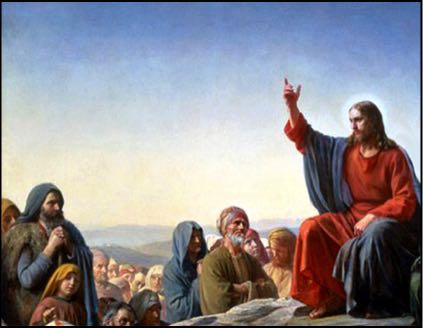
Lecture #1
Lecture #2
Lecture #3
The Mystical Meaning of the Sermon on the Mount, given by Jesus to all mankind.
These rare lectures, in all 12 parts, were given by Swami Jyotirmayananda
of the Yoga Research Foundation - yrf.org
Lecture #4
Lecture #5
Lecture #6


These two most valuable talks below, are given by Swami Sarvapriyananda of the Vedanta Society of New York.
They approach the essence of the culmination of spiritual attainment. They also most wonderfully portray the Ultimate Truth proclaimed by all Avatars, Saints and Sages throughout the ages that the difference between God and mankind can be summed up as:
"Not Two!"


"At the time of Bhagavan's Mahasamadhi (leaving the physical body): Unexpectedly, a group of devotees sitting on the veranda outside the hall began singing 'Arunachala Siva'. On hearing it, Sri Bhagavan's eyes opened and shone. He gave a brief smile of indescribable tenderness. From the outer edges of his eyes tears of bliss rolled down. One more deep breath, and no more. There was no struggle, no spasm, no other sign of death: only that the next breath did not come."
Ramana Maharshi and the Path of Self-Knowledge
Sri Ramanashramam 2002, page 211


“Cut down the entire forest, not just a single tree. From the forest springs fear.
Cutting down both forest and brushwood, be passionless, O stream seekers.
For as long as the slightest passion of man towards desire is not cut down,
so long is his mind in bondage, like the calf to its mother.”
Well awake the disciples of Gotama ever arise — they who by day and night always contemplate the Buddha.
Well awake the disciples of Gotama ever arise — they who by day and night always contemplate the Dhamma.
Well awake the disciples of Gotama ever arise — they who by day and night always contemplate the Sangha.
Well awake the disciples of Gotama ever arise — they who by day and night always contemplate the body.
Well awake the disciples of Gotama ever arise — they who by day and night delight in harmlessness.
Well awake the disciples of Gotama ever arise — they who by day and night delight in meditation.
Enter to view the Buddha's Wood-cutter's Son Enter to view The Meditators Guide for Reducing Stress


"You make the effort. The Masters only point the Way."
The Buddha, the Dhammapada
The student who tries to practice Yama-Niyama brings with him the momentum of all kinds of tendencies from previous lives, and in spite of his resolve, the undesirable habits and tendencies in which he has indulged assert themselves strongly and force him to act, feel and think in ways which go against his ideals.
Discover what is he to do under these circumstances!
"We have forgotten our real nature; we have to regain its awareness. Arjuna was Nara incarnate,
but being embodied, he forgot his real nature. He was in great grief. A war had to be fought
so that the power of right might destroy the evil. When there is trouble, we want to renounce the world.
Face the realities of the world with dispassion, without identifying yourself with them."


Swami Yatiswarananda
Swami Brahmananda

Sri Ramakrishna Paramhansa
Wisdom from The Buddha - Meditate Constantly
The quote above and the following are excerpts from the book "How to Seek God", by Swami Yatiswarananda,
a devotee and lover of God within the lineage of the Sri Ramakrishna Order.
In worldly life, misery comes to everyone. How are you going to face it? Sermonizing is not enough. We must turn to the real source of peace and joy who is the Parama-preme-rupa, Paramananda – svarupa. We have cut ourselves off form that, but the soul is longing for it. We see a little of it in the individual and turn to it. Along with that drop of joy we get a mass of misery. And then death stares us in the face. It may come now, it may come after a hundred years, but it has got to come. This does not mean that we should always dream of death. We have to fulfill our duties to our relations, but we have also the duty to the Supreme Being. Do your duties and at the same time come to that Reality which is Parama-preme-rupa, Paramananda – svarupa.
See everything in its proper light in the light of the Self, and everything will be different. Not that there won't be problems, but a new vision will come. Make the Self more real than your problems. The more you go within, the less will be the outside dependence. There is everything within you; you have only to see. Infinite Bliss is our birthright. Fragrance is within, but we search for it outside. Running away is not the solution. Face problems and rise above them. Thinking of the Supreme Spirit who is ever free, assert yourself.
Mind's course should be upward, like the lotus bud arising from mud and water and keeping its head high up. Unless you are well established in the higher plane you are not safe. See the baby kangaroo. When it is frightened, it jumps into its mother's pouch and from there peeps out, quite safe and serene. So too, we should be firmly established in the Divine within. The source of joy and love is within you. Turn to Him for light, love, guidance, joy, and share them with everybody. Instead of always begging, learn to give. We cannot change the environment, but we can certainly develop a new attitude. Connect all your problems with the Lord. Develop your will awhile. Repeat the Lord's Name. Life, as it is, is misery, but if we have this attitude full of devotion, we accept everything, good and bad, as happening through His will. Great ones always have this view. You know Kunti's prayer – she prayed only for sorrow, so that she might remember the Lord always. Let us get over our fear complex, then you will have strength to rise above troubles. Kabir sings: “It is not a cloudy day when the heavens are cloudy. The cloudy day is that, O mind, when you do not repeat the Lord's Name.”
In the beginning, the environment may disturb us to a considerable extent and we complain about it. But if we attempt to change it drastically we may end in failure. There may be a tendency to go to a solitary place. Very often this is due to escapism. There is no such ideal place in the world which would be entirely free from all disturbances. Every place has its disadvantages and advantages. The environment may be calm and quiet, but if we go there with a troubled mind it may spoil our efforts. We should think: “The Lord has placed me here, in these surroundings, let me adjust myself to this environment.” In the case of disciples, they must adjust themselves to 'where they stand' and find interest in remembrance of the Lord (japa) and meditation. That is a good sign!

From The Bhagavad Gita and Sri Ramana Maharshi
"The Lord, Who is in all things, is NOT in all thoughts!"
"Of the strong,
I am the strength devoid
of desire and attachment,
and in (all) beings,
I am the desire
unopposed to Dharma, O Arjuna!"
Bhagavad Gita 7:11
"I am that strength which is necessary
for the bare sustenance of the body.
I am NOT the strength
which generates desire and attachment
for sensual objects
as in the case of worldly-minded persons."
Swami Sivananda Saraswati Commentary
This most important verse within the Gita, is also to many the most overlooked and disregarded. For those who fall into this category, the reason is obvious. And their anger when contradicted is also most telling.
In our "modern" times, the fast-food approach to spirituality and religion is a most sought for commodity. This mind-set, technically referred to as Neo-Advaita, is in traditional scripture referred to as pramada - spiritual death. Although the Gita's fundamental philosophy declares that the Atman does not ever die, the human capacity to reveal and awaken the consciousness of the Atman can be crippled unto death.
The ancient Saintly King Bartruhari, who became an enlightened Sage, used the word pramada in the correct spiritual sense indicated by the Sage Sunat Sujata. He proclaimed:
“Peetva mohamayeem pramada madiram unmatta bhootam jagat”
“This world (its inhabitants therein) has become mad after having drunk the wine of negligence (pramada: laxity towards the spiritual goal), which being of the form of moha (delusion), has overwhelming power to delude you.” 1
The Sage Sanat Sujata is indicating that the presence of pramada brings about a spiritual death. For the spiritual madness that at first manifests as a fever of willful and angry indifference to the consequences of inattention to and negligence of God, is rendered deadly when it becomes habitual. This madness and anger literally destroys our faculty of discrimination, which before our “disease of pramada” was our guiding light on the path to Godliness.
Sri Krishna clearly states this truth in Chapter 2: 63 in the Bhagavad Gita:
“From anger comes delusion; from delusion the loss of memory; from loss of memory the destruction of discrimination;
from the destruction of discrimination he perishes.”
This is not to be defined as forgetfulness of the Self, unless one admits to a willful and belligerent forgetfulness. It is clearly distraction, willfully averting our attention from the consequences of bad habits.
Realization of the Self, as declared by Sri Ramana Maharshi to be the sole goal of life, comes when we overcome and conquer the obstacles that stand before us as enemies in the guise of seemingly insignificant habits. Therefore Bhagavan declares in no uncertain terms:
“The obstacles that hinder realization are habits of the mind (vasanas), and the aids to realization
are the teachings of the scriptures and of realized souls.” 2
The secondary meaning of pramada is procrastination and a distracted laziness, it means not taking any immediate action to rectify this most soul-stripping heedlessness.
One may say: “God’s grace is always there, so somehow I will get back on my spiritual feet.” But the fatality of staying “dead level” without motivation to rise up comes upon us as pramada gives birth to it's only-begotten son. This offspring of pramada is known in Sanskrit as duragraha. Duragraha means the adamant determination to do that which you know you should never do.
The compound spiritual fracture of being indifferent to God and habitually partaking in negative action with utter disregard for the negative consequences creates a karmic bloodletting fatal even to the strongest constitution.
Regardless of whatever label we choose to call this effort of removing bad habits, whether it be deemed purification, removal of defilement, awakening, being in oneness or even becoming still, it should be known that Bhagavan said it is “effort that instills purity” and stressed that without it the goal of vichara (enquiry) will not be reached.
In direct reference to this Sri Muruganar, one of the foremost direct disciples of Sri Ramana Maharshi, heard the following profound statement from Bhagavan and recorded it that our doubts might be cleared:
“Know that the wondrous jnana vichara is only for those who have attained purity of mind by softening and melting within.
Without this softening and melting away of the mind, brought about by thinking of the feet of the Lord,
the attachment to the “I” that adheres to the body will not cease to be.” 3
Can this “thinking of the feet of the Lord”, prescribed by Bhagavan, be anything other than exactly what it says? Therefore, should we not get busy here and now to “fight the good fight” for spiritual attainment?
Let us leave our battle cry to the General of our forces:
Devotee: “Are we to keep anything against a rainy day; or to live a precarious life for spiritual attainments?”
Maharshi: “God looks after everything.” 4
__________________
1. Mahabharata 5.41-42.
2.Talks with Sri Ramana Maharshi, Sri Ramanashramam 2006, Talk 13, p. 5.
3. Padamalai, Teachings of Sri Ramana Maharshi Recorded by Muruganar, Avadhuta Foundation 2004, p. 186.
4. Talks with Sri Ramana Maharshi, #377.
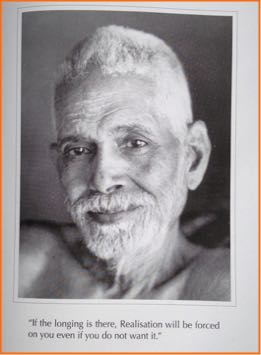


“Whenever you possibly can,
sustain the flow of a Sacred Name (Japa).
To repeat His Name is to be in His presence.
Just as a friend opens his heart to you
and tells you all about himself
when you come to him,
if you associate with the Supreme Friend,
He will reveal His true Being to you.
Do you refrain from bathing
when faced with the waves of the sea?
Surely, you plunge right into the midst of them
and take your bath.
Similarly, in the very thick of
tempests and difficulties of worldly life,
maintain the remembrance of Him—
take to the repetition of His Name.”
— Sri Anandamayi Ma
"The Four Gatekeepers
at the Palace of Liberation"
from Swami Jyotirmayananda (yrf.org)
The Sage Vasistha brings before Lord Rama
insights to entering the Gates of Liberation.
If you befriend any one of the gatekeepers,
without bribing,
then all the others will open before you.
(Enter below on each gatekeeper)

This rare interview below with the personal attendant of Saint Pio who was with him, day and night, for the last years of his earthy life.
During the recording, Fr. Alessio recounts many miracles and wonderful stories about this glorious Saint of God never before heard.




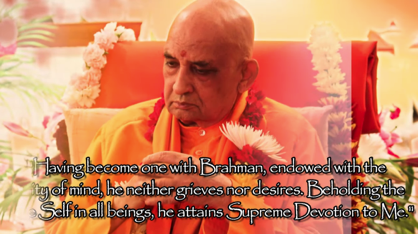
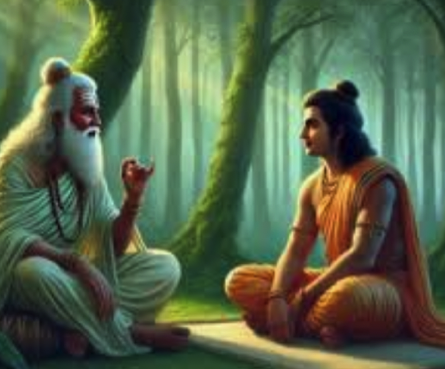
Newest Spiritual Teaching to Explore
From the Book "How to Seek God" by Swami Yatiswarananda:a "How to Face Life"


"Don't puzzle
the mind with
too many
inquiries."
Sri Sarada Devi
a
Prayer is the offshoot of meekness and the absence of anger. Prayer is the fruit of joy and gratitude.
Prayer is the defense against sadness and discouragement.
Those who accumulate pains and grudges in their heart and then imagine that they pray,
are like people who pour water into a cracked vase.
If you think you can heal someone else, be careful not to become incurable yourself and so give a death blow to your prayer.
If you refrain from anger, you will find mercy. So, be careful not to become presumptuous, and you will be among those who pray.
What is good but God alone (cf. Mark 10:18)?
Therefore let us entrust ourselves to Him in all that concerns us, and all will be well for us.
The One who is good is always and the giver of good things (cf. Jas 1:17).
When you find more joy in fulfilling your service of prayer than anything else, then you will truly have found prayer.
Prayer without distraction is the mind's supreme state. Prayer is the ascent of the mind to God.*
__________________
*(Evagrius Ponticus, Chapters on Prayer, 2012, Sr. Dominique Pascale-Nau, Rome)

Chapters on Prayer

The Lord has Come, let us Glorify Him
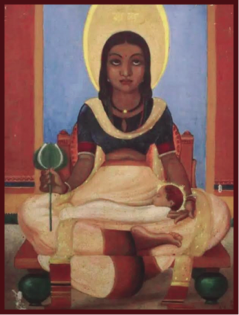
Divine Inspiration from Mahatma Gandhi on Prayer
“The meaning of prayer is that I want to invoke the Divinity in me. You may describe it as a continual longing to lose myself in the Divinity, which compels us all. Prayer really is a complete meditation and melting into the higher Self, though one may occasionally lapse into it, as a child would call out to its mother “Ah, Ma!” In such an instance, the greater the distance between the child and its Mother, the greater the longing within the heart of the child. Thus, in the mind of the child, the Mother is present in thought. And thought, you know, has a greater velocity than light. Therefore though the distance between Him and me is told to be so incalculably far, in truth He is so very near.
“There is an eternal struggle raging in man’s breast between the powers of darkness and light, and he who has the sheet anchor of prayer to lay upon will not be overcome by the powers of darkness. The man of prayer will be at peace with himself, and with the whole world. The man who moves about the world without a prayerful heart will be miserable, and also will make the world miserable. It is a universal experience that every calamity brings the sensible man down on his knees. Millions of human beings call out for God through prayer, thus the calamities of the world are seen as a means for self-improvement."
“If we had attained the full vision of Truth, we would no longer be mere seekers, but have become one with God, for truth is God...
Prayer has saved my life. Without it I should have been a lunatic long ago.”
Mahatma Gandhi

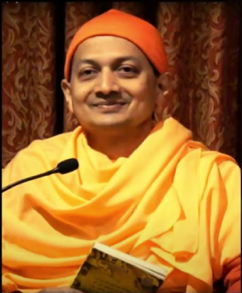
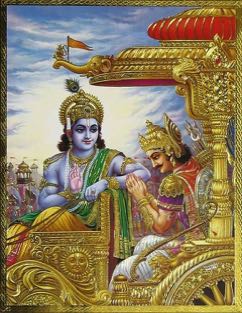
Divine Nectar refreshing the Heart and Soul from the Gospel of Sri Ramakrishna
(Choose below from these two enlightening lectures)
Divine Nectar below illuminating the Heart and Soul from the Bhagavad Gita
The Truth, the Truth and nothing but the Truth - so help me God (Please!)
From the Lord Sri Krishnas 20 practices for a Godward Life:
“Sri Bhagavan spoke and wrote most about the vichara or Self-enquiry,
and therefore the opinion arose that He prescribed only jnana-marga, the Path of Knowledge,
which most people find too sheer in this age. But in fact He was universal and provided
guidance for every temperament, by the path of Devotion no less than of Knowledge.
Love and devotion to Him are a bridge across the abyss to salvation.
He had many devotees for whom he prescribed no other path.”
(Ramana Maharshi and the Path of Self-Knowledge, Arthur Osborne, page 174.)
"Love and devotion to Him are a bridge across the abyss to salvation."

Paramahansa Yogananda on the
Importance of Meditation
(A rare audio recording from the Master)
"Ever-new Joy is God. He is inexhaustible; as you continue your meditations during the years, He will beguile you with an infinite ingenuity. Devotees like yourself who have found the way to God never dream of exchanging Him for any other happiness;
He is seductive beyond thought of competition..."
Sri Ramakrishna: "A devotee can know everything when God's grace descends on him. If you but realize Him, you will be able to know all about Him. You should somehow meet the master of the house and become acquainted with him; then he himself will tell you how many houses he owns and all about his gardens and government securities."
Devotee: "How does one receive the grace of God?"
Sri Ramakrishna: "Constantly you have to chant the name and glories of God and give up worldly thoughts as much as you can. With the greatest effort you may try to bring water into your field for your crops, but it may all leak out through holes in the ridges. Then all your efforts to bring water by digging a canal will be futile.
"You will feel restless for God when your heart becomes pure and your mind free from attachment to the things of the world. Then alone will your prayer reach God. A telegraph wire cannot carry messages if it has a break or some other defect."
"One must not cherish any desire whatever. The devotion of a man who has any desire is selfish. But desireless devotion is love for its own sake. You may love me or not, but I love You. This is love for its own sake.”
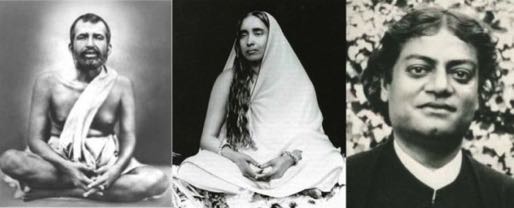
From the Gospel of Sri Ramakrishna
" Guided Meditation"
includes the practice of
linking the movement of the
breath with the sacred
mantra OM.
"Gentle Hatha Yoga"
A unique 1 hour session of
hatha yoga, guided by one
of the foremost instructors
in the Hawaiian Islands.
"An Antidote for Sorrow"
Swami Shantananda discusses
how to train the mind to
experience a measure of peace
within meditation, free from
unwanted thoughts.
The Core teaching of
Sri Ramana Maharshi
This talk discusses the primary teaching of "Who Am I" dictated in the form of questions and answers between Bhagavan and a direct disciple.
It reveals how Bhagavan combined the traditional approach of knowledge and devotion (Jnana and Bhakti) to culminate in a direct perception of God within.
This discussion was given at a university class of religious study.

Quick Audio Links to Favorite Website Contents
"God Rocking the Cradle"
Part 1 of 3. The making of an
Himalayan Saint,
Swami Shantananda Puri

"God Rocking the Cradle"
Part 3 of 3. The making of an
Himalayan Saint,
Swami Shantananda Puri
"God Rocking the Cradle"
Part 2 of 3. The making of an
Himalayan Saint,
Swami Shantananda Puri
"Not Pained by Pain"
with breath meditation
by
Thanissaro Bhikkhu

A rare interview with the
personal attendant of Saint Pio
Who was with him, day and night, for the last years of his earthly life. During the recording, Fr. Alessio recounts many miracles and wonderful stories about this glorious Saint of God never before heard.



Papa Ramdas on the
Importance of Prayer and Japa
O Lord of the Universe,
O Creator, Protector and Destroyer of the worlds,
I come in all humility to Thy holy feet,
And surrender myself entirely to Thee.
Deign to bless me ever with Thy remembrance.
"Om Sri Ram Jai Ram Jai Jai Ram"

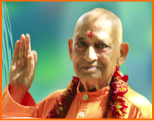
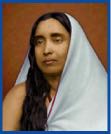
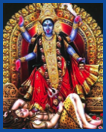
Sivoham Part 1 of 4
"We are asked to resign ourselves to the will of God.
There is nothing but the power of God active in nature,
active in ourselves.
By surrendering ourselves to the Divine power and Will
we will release within us that
Supreme Bliss and Peace that is locked up."
Papa Ramdas






Enter on your choice

"I shall give you what no eye has seen, and what no ear has heard, and what no hand has touched,
and what has never occurred to the human mind." Book of Yeshua
Bytes of Wisdom From Bhagavan Ramana Maharshi
It is related (and the story is no less significant whether historically true or not) that after attaining Enlightenment the Buddha’s first impulse was to abide in the effulgence of Bliss without turning back to convey the incommunicable to mankind. Then he reflected,
“Some there are who are clear sighted and do not need my teachings, and some whose eyes are clouded with dust who will not heed it though given, but between these two there are also some with but little dust in their eyes, who can be helped to see;
And for the sake of these I will go back among mankind and teach.”
(For Those with Little Dust, Selected Writings of Arthur Osborne, p. 85)

This book is dedicated
with respectful thanksgiving to
Arthur Osborne,
who in his life of discipleship to
Sri Ramana Maharshi
sought to bring understanding
for those “of little dust”.

Divine Wisdom from Sri Anandamayi Ma
To tell the truth, while some people undoubtedly do approach this body in quest of Reality,
very many come only to get their desires and longings fulfilled.
By sorrow does the Lord dispel sorrow and by adversity does He destroy adversity. When this is done He sends no more suffering
— this must be borne in mind at all times.
All this, which is His creation, is under His dispensation, in His presence and is He.
In whatever state He keeps anyone at any time it is all for the good, for verily everything is ordained by Him, is of His.
Relative happiness, which is happiness depending on anything, must end in grief. It is man’s duty to meditate on God, Who is peace itself. Without having recourse to that which aids the remembrance of God there can be no peace .Have you not seen what life in this world is? The one to be loved is God. In Him is everything --- Him you must try to find.
If anything is to be had — whatsoever, in whatever way — it must be had of Him alone.
Man’s bounden duty as a human being is to seek refuge at His Feet.
Days glide on; already you have let so many go by; anchored in patience endeavour to pass the few remaining.
Every moment belongs to God; Endeavour to keep your mind dedicated to His Feet. God, the Ocean -of Mercy, who ever blesses the world,
pours out His grace at all times. It is incumbent on man to consider everything that happens to be for the best:
‘For the best’ denoting what is most helpful towards the realization of the Divine, the realization of the fullness of Bliss.
The ceaseless, never-ending current of divine Mercy and Compassion ever flows forth; in that current one should bathe.
"To lose all is to gain all. He is merciful and compassionate.
Whatever he does at any moment is all-beneficent,
thought certainly painful at times.
When He manifests Himself as all lose,
there is hope that he may also manifest Himself as all-gain."
Sri Anandamayi Ma
From Matri Vani, Sri Anandamayi Ma on
"Finding time to find God"
At one time you declared emphatically that if only you could secure suitable employment, you would most earnestly cultivate the spiritual side of life along with material comforts and pleasures. That you have kept your word as to worldly enjoyment is more than obvious; but in what dark cave, in what inaccessible abyss have you hidden away the tender plant of spiritual aspiration? When will you start making an effort to bring light into that dark cave? Delay not: The day that is gone never returns. Invaluable time is slipping away. Devote your days to the endeavour to draw close to the Lord of the Humble. When extreme old age supervenes, you will be too sluggish, to feeble to concentrate on God‘s name. How will you then make up for what you failed to do in good time?
The activity of the mind that distracts man and takes him away from the remembrance of God is called wrong thinking. Endeavour to cultivate whatever will prevent your mind from harbouring that type of thought.
All your burdens are borne by God. Be convinced of this and ever try to abide sincerity and cheerfulness.
“Ishta Devata and Guru are aids -
very powerful aids on this path.
But an aid to be effective requires your effort also.
Your effort is a sine qua non.
It is you who should see the sun.
Can spectacles and the sun see for you?
You yourself have to see your true nature.
Not much aid is required for doing it!”
Talks with Sri Ramana Maharshi #28





"Even in the midst of troubles and vexations one has to rely on God,
practice japa and meditation and aspire to grow spiritually.
By enjoying the pleasures and comforts of material life nobody ever attains to the realization of God.
Cultivate the remembrance of Him, who when you contemplate Him,
when you enthrone His form in your heart, will give you peace.
So long as He does not reveal Himself in a way that will dissolve all obstacles and obstructions,
strive to live ever in His presence."
Sri Anandamayi Ma in Matri Vani II, #64
Collected Sayings from Swami Shantananda Puri from “Droplets of Wisdom Sublime”
compiled by Swami Sadasivananda Giri
Some Selected Quotes from Droplets of Wisdom Sublime
{32}
While spiritual growth is at the sapling stage, it is imperative to hedge it about and protect it from all that would impede or even destroy its life.
{33}
If one is following a path that begins to bring about spiritual awakening, some degree of bliss and joy can be experienced from the very early stages of sadhana.
{34}
One must be careful that this feeling of inner contentment does not put one off guard and complacent as to the dangers of the outer world. Many of the greatest saints have continued inner spiritual practice, even after the attainment of the highest degrees of life in the Spirit.
{35}
There is a school of Hindu thought, which advocates that the world must be considered as crow droppings. For they say that the moment you consider the world is real, it becomes impossible to overcome.
{36}
It is said that unless the mind understands the world to be nothing but a dream, and is thoroughly convinced of it, then only can one come out or awaken from it.
{37}
Sri Ramana Maharshi, in his '40 Versus on Reality', teaches an alternate approach. In truth, no one knows whether the world is real or unreal, though there are an infinite number of opinions on the subject. The Maharshi therefore says, "Why do you worry whether the world is real or unreal, whether the world is conscious or unconscious? The entire question is absolutely unnecessary; one should concentrate on to whom this appearance or illusion is manifested".
{38}
When one yearns for the Mother to come, that yearning itself brings the dawn of the advent of Her light. The perception of that light creates a yearning for more light. One then begins to understand that that light is most clearly perceived in the depths of meditation. Thus, the yearning invokes more depth of experience in spiritual life.
In this satsang, with
Sri Swami Jyotirmayananda,
"The Complete Guide to Ram Naam"
is unveiled for all to cherish!
(Enter on Lord Ram and Hanumanji
to discover)


Sivoham Part 2 of 4

Sivoham Part 3 of 4
Sivoham Part 4 of 4


This Divine Prayerful Embrace and Yearning of Our Lord is by GuruDev Swami Sivananda.
It is the invocation from his foundational book, which can be freely viewed and downloaded here:


Sri Swami Sivananda


"Mouna (Stillness) of the mind is far superior to Mouna of Vak (speech). Mouna should come of itself. It must be natural. Forced Mouna is only wrestling with the mind. It is an effort. If you live in Truth, Mouna will come of itself. Then only will there be absolute peace."
Swami Sivananda in Mind - It's Mystery & Control
Sri Ramakrishna said to Ishan: "Live in the world like an ant.
The world contains a mixture of truth and untruth, sugar and sand.
Be an ant and take the sugar.
Again, the world is a mixture of milk and water,
the bliss of God-Consciousness and the pleasure of sense-enjoyment.
Be a swan and drink the milk, leaving the water aside.
Live in the world like a waterfowl.
The water clings to the bird, but the bird shakes it off.
Live in the world like a mudfish.
The fish lives in the mud, but its skin is always bright and shiny.
The world is indeed a mixture of truth and make-believe.
Discard the make-believe, and take the truth."
Gospel of Sri Ramakrishna Ch. 25, p. 472


Enter below for a most enlightening talk on an Avatara of our modern age.
In this satsang, Swami Jyotirmayananda
shows us how we can
Reveal God, the Self in the World
through Ram Naam.
a
(Enter below on Swamiji
to discover)
Guided Meditation
Using the traditional method of watching the breath, also includes the practice of linking the movement of the breath with the sacred mantra OM,
(or chant Soham, or as you wish, any Name of God)

CONTINUE BROWSING BELOW FOR MORE WISDOM
FROM MAJOR FAITH TRADITIONS


From the Gospel of Sri Ramakrishna
"The body is really impermanent. When my arm was broken I said to the Mother,
"Mother, it hurts me very much." At once She revealed to me a carriage and its driver.
Here and there a few screws were loose. The carriage moved as the driver directed it.
It had no power of its own." The Master to Trailokya (smiling) p.397.
Enter on your choice
Om Sri Ram Jai Ram Jai Jai Ram
"Constant repetition of Ram-mantram
and practice of meditation
will give you the needed
strength and courage to overcome
all weaknesses of the mind and the heart."
"Repetition of the Ram-mantram,
meditation on the attributes of God,
and surrender of all your actions to the Lord,
is the way."
"When the Lord’s Name is on our lips,
we need not be afraid in this world
or in any other world.
Do not forget that you are the immortal Truth."
Papa Ramdas
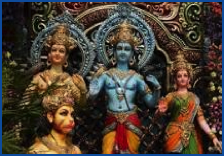
In these most important and rare satsangs, Swami Jyotirmayananda ( yrf.org )
reveals in Satsang #1 the true meaning and purpose of Japa,
the repetition of the Divine Names of God, in which Tulsidas declares
how the Divine Name is more powerful than Brahman!
In Satsang #2 Tulsidas proclaims "What makes the Name of Ram more powerful than Rama Himself!"
In Satsang #3 Swamiji relates how "Rama Nam is the Ultimate Spiritual Practice!"



Om Sri Ram Jai Ram Jai Jai Ram
Papa Ramdas on Prayer and Japa
"Be anchored in fearlessness. What is worldly life but fear!
When you live in the grip of fear, must you not be afraid? It is futile to expect fearlessness there.
That you may be delivered from all sorrow you should endeavour to let God be your one and only support."
Sri Anandamayi Ma in Matri Vani
"Devotee: If one realised the Self and acted up to it in the West, one would be locked up in a lunatic asylum.
Maharshi: You will be locking yourself in. Because the world is mad, it considers you mad.
Where is the lunatic asylum if it is not within. You will not be in it, but it will be in you.
Uncertainties, doubts and fears are natural to everyone until the Self is realised.
They are inseparable from the ego, rather they are the ego."
Sri Ramana Maharshi in Talks #612
"Look, in order to pluck a rose one has to put one’s hand into the midst of thorns.
But if the rose is a person’s aim and he has a keen desire to pluck it, he will not refrain from doing so for fear of being pricked.
Moreover, the Great Mother arranges whatever is necessary for each one.
She certainly knows the real need of every individual.
If one has at least this much faith, there is no reason at all to feel fear and distress...
Sustain the flow of God’s Name and no fear of any kind can exist is His Presence."
Sri Anandamayi Ma
As long as a man is negligent, he fears the hour of death; when, however, he comes near to God, he proceeds firmly and both kinds of fear are taken away. How does this happen? While his knowledge and his behavior are of a bodily nature, he is frightened by death. But when his knowledge is of a psychic nature, and his behavior is steadfast, his mind is moved by the thoughts of Judgement every moment. In the first state he belongs wholly to nature; in the psychic state he is moved and guided by his knowledge and by his discipline. And he is happy in the neighborhood of God. But when he reaches true knowledge by the motion of the apperception of God's mysteries and he becomes confirmed in future hope, he is consumed by love.
Love of God Annihilates Fear

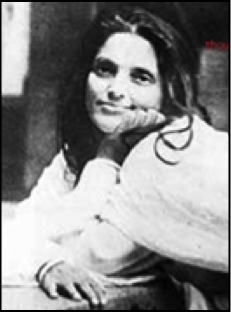
From the Mystic Treatises of Saint Isaac of Nineveh

It is as if grief wants to let us be individual and react in our own personal way.
Grief’s love and loss together, can show us our natural wild powerful feelings
and give us the opportunity to express this in our own way.
At the same time, society wants us to conform, to be just like everybody else
in silence, and behave as expected, so we don’t cause any bother, awkwardness or
embarrassment.
Although they may seem completely at odds with each other,
our personal expression of the natural wild feelings of grief and society’s detached attitude actually share the same aim, which is to show us we are not separate.
Grief shows us something, it gives us something, because grief is not nothing.
It shows us that our way is the same way as everybody else’s way, only different.
Grief makes us aware we are each like a wave in the ocean, slightly different from each other but not separate from the ocean, not separate from each other, part of a whole,
In grief’s love and loss together, we experience in our own way what everyone else
experiences in their own way.
a
This love and loss together can show us an awareness which is common to all.
This awareness is irrespective of our culture, our tribe or any group we belong to. This awareness of being part of a whole, is awareness of what we are to each other.
Free Expression and Expectations - Different not Separate
An Adaptation of an Introduction of a poem by Rumi
"Look at Love"


Look at Love - a Poem by Rumi
look at love how it tangles
with the one fallen in love
look at spirit how it fuses with earth
giving it new life
why are you so busy with this or that or good or bad
pay attention to how things blend
why talk about all the known and the unknown
see how the unknown merges into the known
why think separately of this life and the next
when one is born from the last
look at your heart and tongue one feels but deaf and dumb
the other speaks in words and signs
look at water and fire earth and wind
enemies and friends all at once
the wolf and the lamb the lion and the deer
far away yet together
look at the unity of this spring and winter
manifested in the equinox
you too must mingle my friends since the earth and the sky
are mingled just for you and me
be like sugarcane sweet yet silent
don’t get mixed up with bitter words
my beloved grows right out of my own heart
how much more union can there be
***************
“A motto of the human race:
Let me do as I like, and give me approval as well.”
"Perform good deeds and observe spiritual discipline. Fool, listen with gratitude.
Lovers fasten your sandals. The fool's youth slipped away unnoticed."
When my Beloved appears
With what eye do I see him?
With his eye, not mine,
For none see Him but Himself.
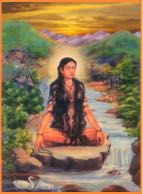


Letters from Arunachala
Over the past quarter century, there has been an increased interest in Bhagavan Sri Ramana Maharshi, his life and teachings as well as an explosion of Indian pilgrims particularly around the full moon, who come to be blessed by the sacred hill Arunachala. Bhagavan was drawn to this sacred hill as a boy and left his childhood home at Madurai in 1896 to be at Tiruvannamalai where Arunachala is situated. He stayed at various places near and on Arunachala before he eventually settled down at the foot of the hill where the present-day ashram grew around him, and he remained there steadfastly for the rest of his mortal life. He left his physical body in 1950. When he was still a young man he would often walk around the hill and he also composed songs in its praise.
Arunachala was his guru.
The following is a personal account of one with Western heritage possessing an Eastern yearning heart, who came to Arunachala-Ramana decades ago along with a steadily increasing trickle of other Westerners who felt the call of Sri Ramana and the sacred hill.
The journey is also our journey, for we all travel along a well-defined path in our efforts to understand who we are and, in this instance, be absorbed in that embodiment of Grace and Love, Arunachala-Ramana.
My spiritual journey and the development of an understanding came slowly over decades and now is shared with you. At times it was painful but I would not have wanted it any other way for looking back I see how much was learnt amid tribulation. This journey has not ended and I am still on the way. As a devotee of Sri Ramana Maharshi, I have learned, as much as my capacity allows, to trust that higher power which guides all of us if we but recognize and surrender to it. I was incredibly lucky to come under the auspices of Sri Ramana Maharishi. I could not wish for more for anyone.
